Free AI Tools for Manufacturing: What They Can and Cannot Do
Separate free AI tools for generic drafting and spreadsheet help from connected factory data, permissions, audit trails and live workflows.
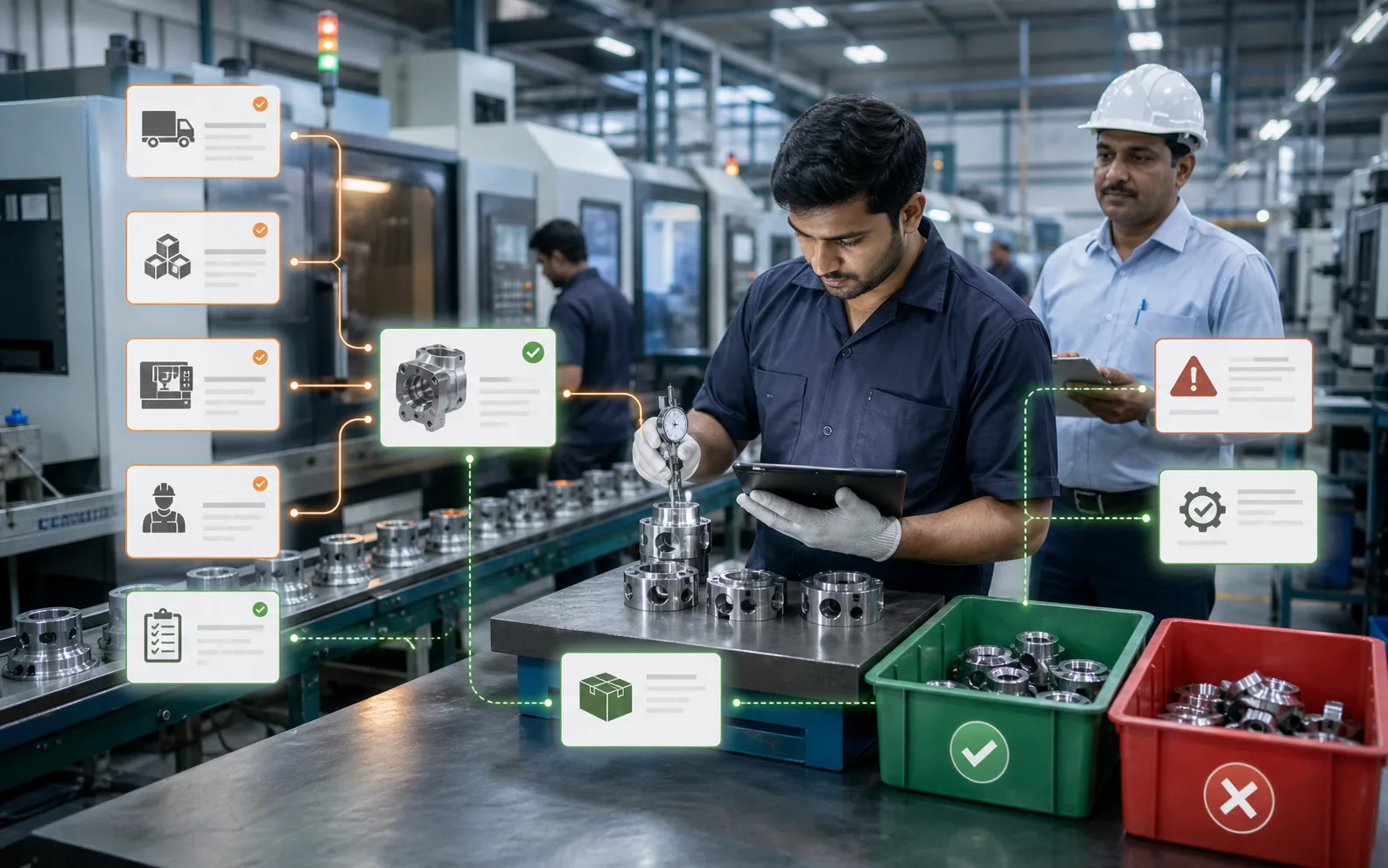
Free AI tools can be useful, but they usually sit outside the factory system. That makes them good for drafts and rough analysis, and weak for controlled production, purchase, inventory and quality actions.
Optiwise focuses on connected manufacturing work: records, roles, approvals and actions that stay inside the operating workflow.
Direct answer
Free AI tools can help with drafting and analysis, but manufacturing execution needs connected records, permissions, approvals and audit trails.
Factory example
A buyer pastes supplier quotes into a free AI tool and gets a comparison. That may help writing a note, but it does not know approved vendors, delivery history, quality performance, current indents or PO approval rules unless those records are controlled and connected.
Worksheet for the decision
| Area | What to check | Why it matters |
|---|---|---|
| Use case | Free AI fit | Connected Optiwise need |
| Drafting SOP text | Useful for first draft | Version, acknowledgment and role access |
| Spreadsheet formula help | Useful for one-off analysis | Live inventory and approval record |
| Vendor comparison | Limited without history | Quote, delivery and quality data |
| Production summary | Manual copy-paste risk | Work orders, output and delays |
| Quality review | Cannot decide disposition alone | Inspection, hold and corrective action |
| Inventory action | No safe system action | Stock, reservation and purchase indent approval |
How Optiwise supports this workflow
- Use natural-language AI on connected Optiwise records.
- Keep actions governed by role permissions.
- Use ERP, MES, IoT and no-code workflows together instead of disconnected copy-paste.
Use the related Optiwise workflows for AI agents, production, inventory, purchasing, quality and industrial IoT.
Implementation notes
Free tools are most useful before the operational workflow begins. They can help draft a checklist, explain a formula, clean a small CSV or brainstorm inspection questions. Once the task touches live stock, supplier commitments, quality disposition, customer delivery or payroll-like sensitive data, move the workflow into a controlled system with roles and history.
Source and control checks
For AI risk and governance language, compare your project controls with the NIST AI Risk Management Framework. For connected device access and security planning, also review CISA cybersecurity performance goals where applicable.
Before using the recommendation, confirm the record owner, source timestamp, approval rule and missing-data handling. Keep customer results, savings numbers, safety certification and regulatory claims out of the page unless there is separate evidence for that exact claim.
Buyer review before rollout
Before rollout, review one finished transaction from start to end. Check the source record, the recommended action, the approval step, the person who accepted or rejected it and the operational result. This review catches weak data, vague ownership and unsafe automation before the workflow reaches more users. Keep the pilot narrow until the team can explain the recommendation in plain factory language.
FAQs
Should a factory use free AI tools at all?
Yes, for drafts, learning and isolated analysis. Do not use them as the system of record for operational decisions.
What makes connected AI different?
Connected AI can read the approved records and create controlled actions inside the workflow.

Related Posts
Is AI Worth the Investment for My Factory?
Learn how to decide if AI is worth the investment for your factory by evaluating use cases, data readiness, costs, risks, ROI, and operational impact.
13 Jun 2026Read more →Manufacturing AI Mistakes to Avoid Before You Start
List manufacturing AI mistakes and controls for unclear use case, messy data, unsafe automation, no owner, weak security and unreviewed recommendations.
13 Jun 2026Read more →What's the Difference Between AI and Regular Automation?
Understand the difference between AI and regular automation in manufacturing, with practical examples for workflows, decisions, alerts, and predictive operations.
13 Jun 2026Read more →What Are the Risks of Using AI in Manufacturing?
Understand the risks of AI in manufacturing, including bad data, wrong recommendations, safety issues, security, job fear, over-automation, and implementation failure.
13 Jun 2026Read more →