
Quality Control Software for Manufacturing: Inspection to Corrective Action
Show manufacturing quality-control software from configurable inspection forms through hold, rework, pass decisions, supplier and batch links, corrective action and reporting.

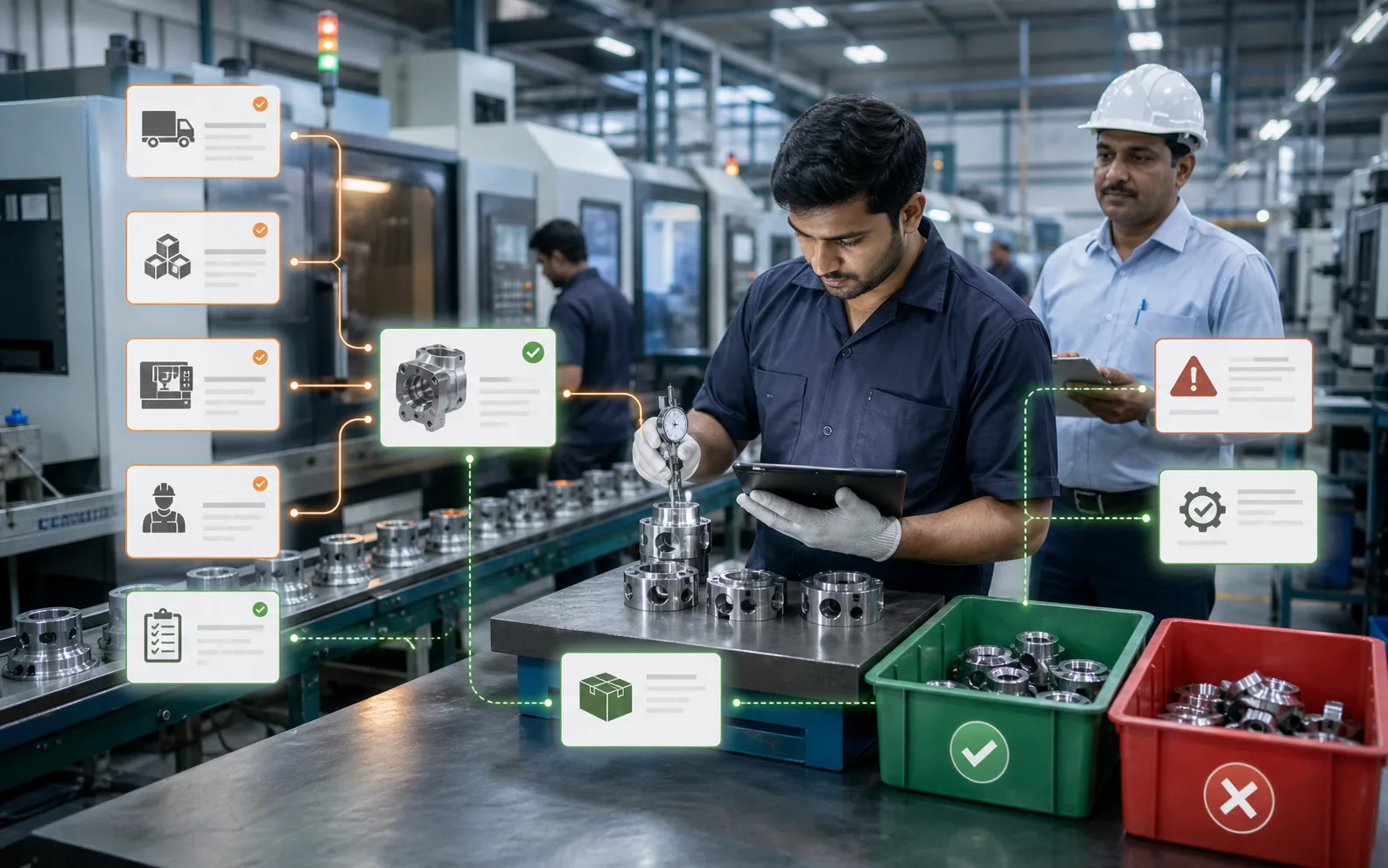
Quality-control software is useful when it changes material movement. A pass, fail, hold or rework decision should affect stock, production and dispatch, not sit in a separate file.
Optiwise connects inspection requests, configurable forms, quality decisions and inventory status so quality records remain part of daily manufacturing work.
Direct answer
Quality-control software should connect inspection forms, hold/rework/pass decisions, supplier or batch history, corrective actions and reporting.
Factory example
Incoming material fails one inspection parameter. The system keeps the lot on hold, records the failed parameter, links the supplier, assigns corrective action and prevents accepted stock from being used until the quality owner decides.
Worksheet for the decision
| Area | What to check | Why it matters |
|---|---|---|
| Workflow step | Record needed | Operational result |
| Inspection request | GRN, production or final check | Quality queue is visible |
| Parameter form | Limits, result and evidence | Consistent inspection |
| Disposition | Pass, fail, rework or hold | Controls stock movement |
| Supplier or batch link | Vendor, lot, product and order | Supports traceability |
| Corrective action | Owner, due date and evidence | Prevents repeated issue |
| Reporting | Defect, supplier and process trend | Guides review |
How Optiwise supports this workflow
- Use configurable inspection forms and parameters.
- Run GRN and production quality checks before stock is accepted.
- Keep hold, rework and pass decisions connected to inventory and production.
- Assign corrective actions with owners and evidence.
Use the related Optiwise workflows for AI agents, production, inventory, purchasing, quality and industrial IoT.
Implementation notes
Quality-control software should make exceptions visible. If material is on hold, production, stores and dispatch should all see the same status. If rework is approved, the system should show who approved it, what work is needed and when it returns for inspection. This prevents rejected or unreviewed material from moving because one team missed a message.
Source and control checks
For AI risk and governance language, compare your project controls with the NIST AI Risk Management Framework. For connected device access and security planning, also review CISA cybersecurity performance goals where applicable.
Before using the recommendation, confirm the record owner, source timestamp, approval rule and missing-data handling. Keep customer results, savings numbers, safety certification and regulatory claims out of the page unless there is separate evidence for that exact claim.
Buyer review before rollout
Before rollout, review one finished transaction from start to end. Check the source record, the recommended action, the approval step, the person who accepted or rejected it and the operational result. This review catches weak data, vague ownership and unsafe automation before the workflow reaches more users. Keep the pilot narrow until the team can explain the recommendation in plain factory language.
FAQs
What should quality-control software control first?
Start with the inspection point that blocks the most rework or customer complaint: incoming, in-process or final inspection.
Should quality software be separate from ERP?
It can be separate, but manufacturing teams act faster when quality decisions affect stock, production and dispatch in the same workflow.

Related Posts
How Sensors Help With Quality Control in Manufacturing
Explain quality-control sensors through measured property, tolerance, calibration evidence, sampling, false alerts and human disposition.
11 Jun 2026Read more →Track Quality Issues in ERP: Inspection to Disposition
Follow an inspection issue through stock hold, approved rework or scrap, quantity reconciliation and corrective-action checks, with a 50-part example.
28 May 2026Read more →How Can IoT Improve My Quality Control Process?
Learn how IoT improves quality control by connecting inspection data, batch traceability, machine conditions, process parameters, and corrective action.
13 May 2026Read more →
Predictive Maintenance Software: A Growing Manufacturing Tech Career
Learn why predictive maintenance software is creating manufacturing tech careers in IoT, analytics, AI, machine data, and ERP-connected operations.
3 May 2026Read more →