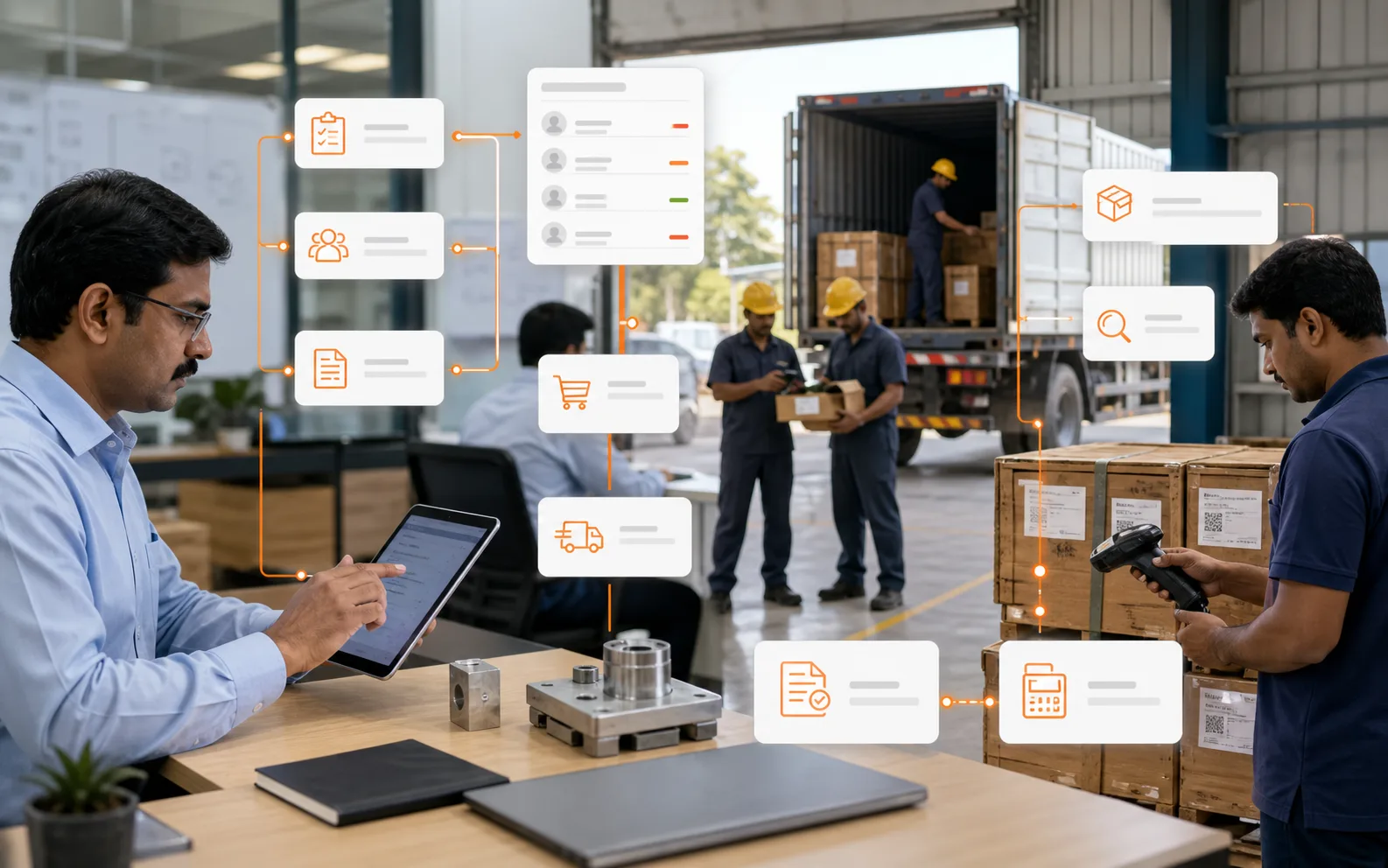


Will an ERP System Help Me Track Orders and Enquiries Better?
See how ERP helps manufacturers track enquiries, quotations, customer orders, production status, dispatch commitments, and follow-ups in one connected system.
Loading Optiwise
A structured blog experience powered by the local AICAN CMS, with rich publishing, search visibility, and editorial control without WordPress.

Filter blog posts
2013 posts available, showing 433-456

See how ERP helps manufacturers track enquiries, quotations, customer orders, production status, dispatch commitments, and follow-ups in one connected system.

Learn how small businesses implement ERP successfully with focused scope, clean data, team training, phased rollout, practical reports, and strong owner involvement.

Learn how AI integration helps smaller manufacturers compete with larger players through better planning, visibility, delivery reliability, and cost control.

Learn what DRIFT means in manufacturing, why first-time-right quality matters, and how AICAN Optiwise helps reduce rework, rejection, delays, and hidden costs.

Learn what manufacturers should understand about factory data after signing an AI software contract, including ownership, access, migration, privacy, and exit rights.

Learn what input tax credit means under GST, why purchase discipline matters, and how manufacturers can maintain cleaner ITC-ready records.

Learn when a small business really needs ERP, what signs to watch for, and when simpler tools may still be enough.

Learn how computer vision helps reduce production waste by catching defects earlier, improving process control, reducing rework, and connecting quality data to factory decisions.

Learn how manufacturers can manage multiple production lines with real-time visibility, shared schedules, clear priorities, bottleneck alerts, and connected production data.

Industry 4.0 for Manufacturers: Connect Signals to Decisions. Use a worked factory scenario, explicit inputs and exception checks before rollout.

Learn how AI can reduce manufacturing downtime through early warning signals, maintenance planning, material readiness, production monitoring, and root cause analysis.

Learn how AI can help reduce manufacturing downtime through predictive maintenance, downtime analysis, schedule alerts, spare planning, and faster decisions.

Learn how ERP supports manufacturing quality control through inspection plans, incoming checks, in-process quality, rejection, rework, traceability, and audit records.

Compare basic and advanced inventory systems, including stock tracking, barcode workflows, forecasting, AI optimization, supplier visibility, and production integration.

Learn how refrigerated warehouses can monitor temperature, batch inventory, cold room performance, alerts, maintenance, dispatch, and quality review.

Learn how manufacturers can choose the right production monitoring tool by evaluating workflows, dashboards, shop-floor usability, alerts, integration, reporting, and ROI.

AI agents and outsourced teams solve different problems. AI fits repetitive digital tasks, while outsourced teams handle human judgment, relationships, and complex work.

Learn what ERP vendor support should include for small businesses: onboarding, implementation, training, go-live help, updates, bug fixes, tickets, and change requests.

Learn how to decide if your manufacturing company needs AI by checking delays, defects, downtime, inventory issues, reporting effort, planning gaps, and data readiness.

Learn how IoT can improve PCB manufacturing through machine visibility, process monitoring, downtime tracking, quality alerts, environmental data, traceability, and ERP-connected dashboards.

Learn how ERP helps machinery and equipment manufacturers manage BOMs, assemblies, procurement, production, quality, costing, dispatch, and service.

Learn how long manufacturers typically take to see ROI from ERP, what affects payback, which benefits appear first, and how to measure ERP return realistically.

Build a manufacturing BOM with a copyable template, a checked 40-enclosure example and practical rules for units, revisions, allowances and approval.

Learn how to compare manufacturing AI vendors based on use case fit, data needs, ERP integration, explainability, security, support, training, and ROI.