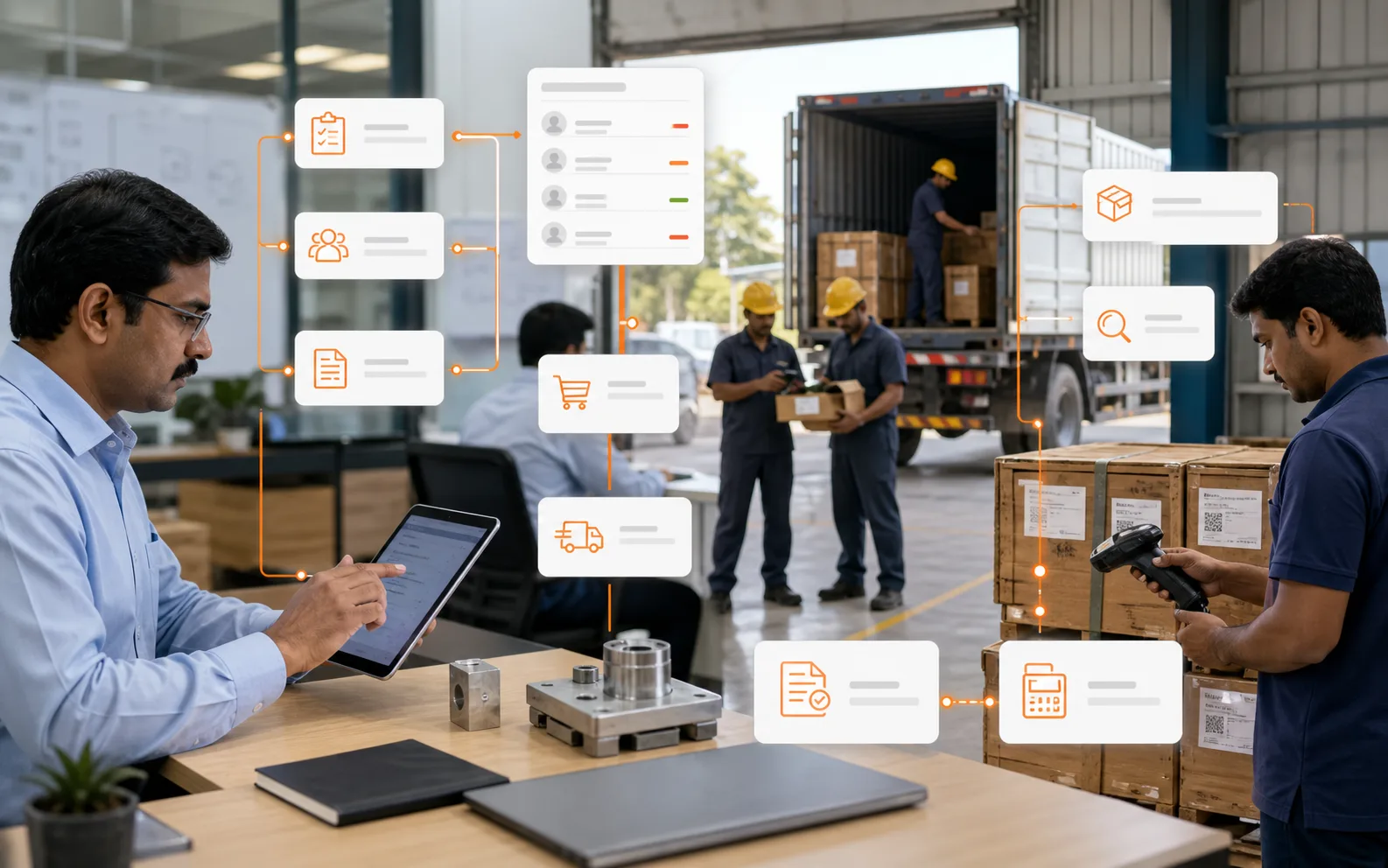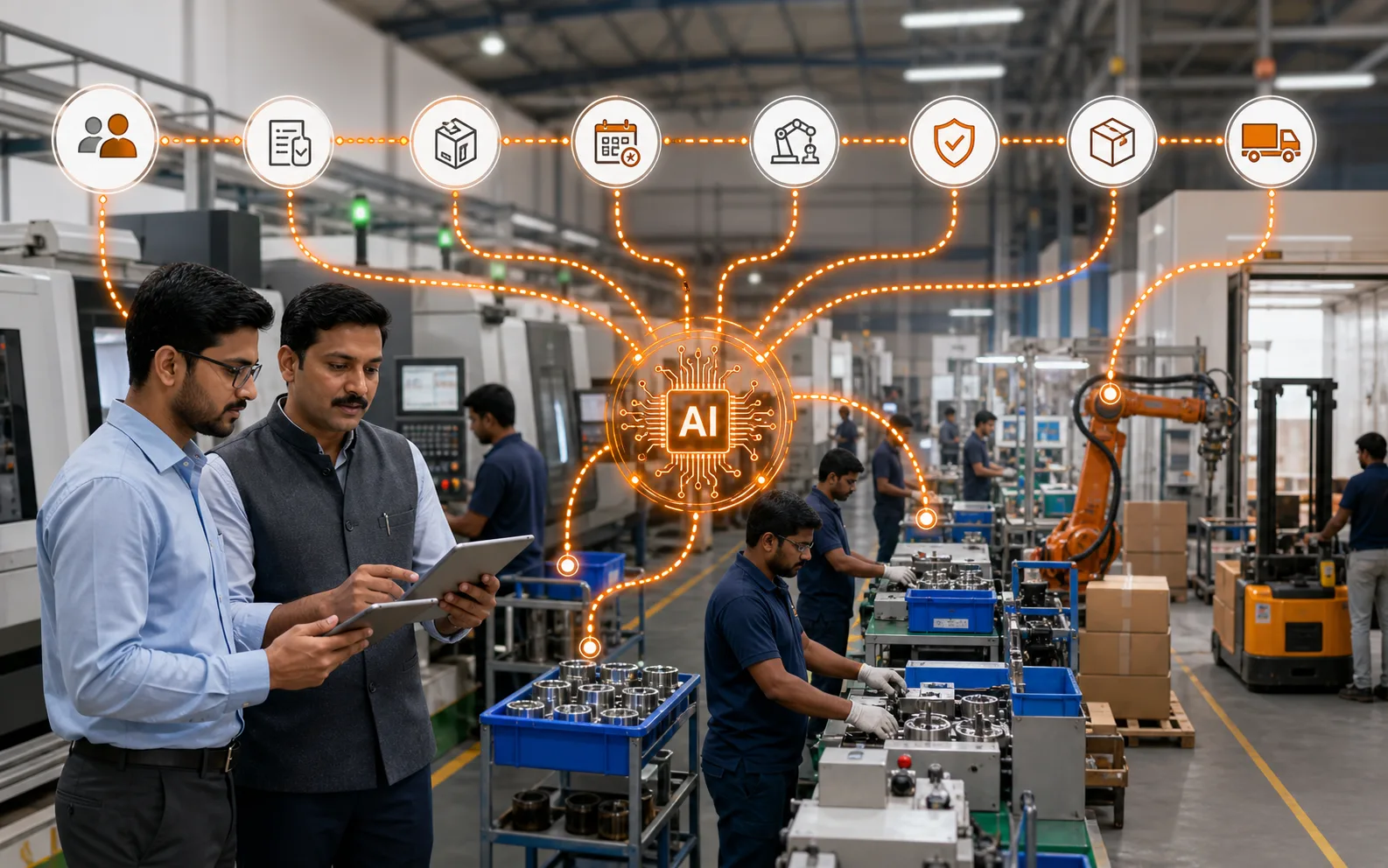

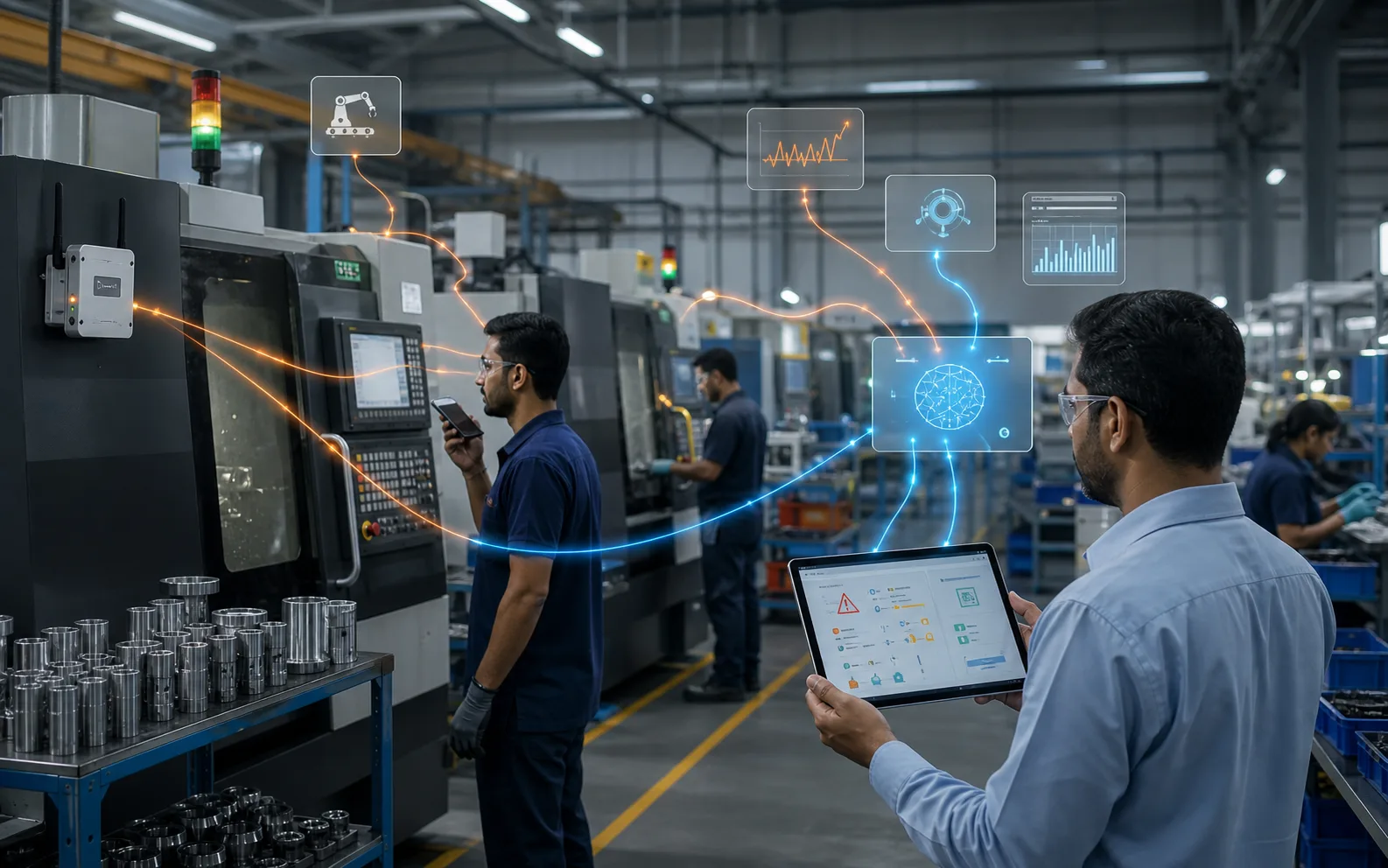
What Happens to Middle Management Roles in Automated Factories?
Automation changes middle management roles in factories by shifting managers from manual follow-up to data-driven coordination, coaching, and exception handling.
Loading Optiwise
A structured blog experience powered by the local AICAN CMS, with rich publishing, search visibility, and editorial control without WordPress.

Filter blog posts
2013 posts available, showing 865-888

Automation changes middle management roles in factories by shifting managers from manual follow-up to data-driven coordination, coaching, and exception handling.

Learn how mobile factory dashboards help owners and managers view production data from a phone, including output, WIP, downtime, QC, dispatch, and alerts.

Learn how inventory software helps companies serve customers faster through stock visibility, order readiness, dispatch planning, fewer stockouts, and better communication.

Learn the most common barriers to AI adoption in manufacturing, including poor data, disconnected systems, unclear ownership, resistance, cost concerns, and weak measurement.

Understand work in process inventory, how it differs from raw material and finished goods, how to calculate it, and how Optiwise helps manufacturers control WIP.

Understand the difference between GSTR-2A and GSTR-2B, why ITC reconciliation matters, and how Optiwise helps manufacturers keep purchase and GST records aligned.

Learn marginal rate of transformation, how it explains production trade-offs, examples for manufacturers, limitations, and how Optiwise improves resource visibility.

Learn how to discuss AI and job security with your boss in a constructive way, focusing on training, role changes, productivity, and future opportunities.

Learn how small businesses should evaluate ERP software cost and benefits, including implementation, ROI, productivity, inventory control, and how AICAN Optiwise supports SMEs.

Learn how manufacturers can reduce production line waste using factory floor visibility, downtime tracking, WIP control, quality data, material flow, and lean manufacturing principles.

AI for Production Delays: Build an Explainable Exception Queue. Use a worked factory test, explicit inputs and exception checks before rollout.

Discover how manufacturers can identify production bottlenecks using factory floor visibility, WIP tracking, downtime analysis, line performance, and connected ERP data.

Learn how to cancel an e-way bill, when cancellation is allowed, common mistakes, and how ERP helps avoid wrong e-way bill data.

Learn how manufacturers can build a practical business case for inventory software using cost, cash flow, production, and operational visibility metrics.

Learn how AI improves preventive maintenance scheduling by using runtime, downtime history, machine risk, spare planning, production schedules, and maintenance priorities.

Learn how small manufacturers can start with essential ERP features and add modules later without overbuying, disrupting operations, or limiting future growth.

Learn what demand management means, how it connects sales, production, inventory, and purchase, and how AICAN Optiwise helps manufacturers plan better.

Learn what affects machine vision setup time on production lines, including defect definition, samples, lighting, installation, integration, testing, and training.

Production Planning: Protect Material, Capacity and Delivery Commitments. Use a worked factory test, explicit inputs and exception checks before rollout.

Learn what a business intelligence dashboard is, which KPIs SMEs should track, common mistakes, and how AICAN Optiwise gives manufacturing teams real operating visibility.

Learn how cloud-based ERP helps chemical manufacturers manage batches, inventory, compliance, quality, purchase, production, and reporting with AICAN Optiwise.

Learn how to manage raw material consumption through BOM control, issue tracking, variance analysis, scrap monitoring, production planning, and ERP visibility.

Learn how an order management system helps manufacturers manage sales orders, inventory, production readiness, dispatch status, and customer commitments.

Learn what ERP should include for welding and fabrication businesses, from job cards and welding stages to material control, quality inspection, subcontracting, dispatch, and costing.