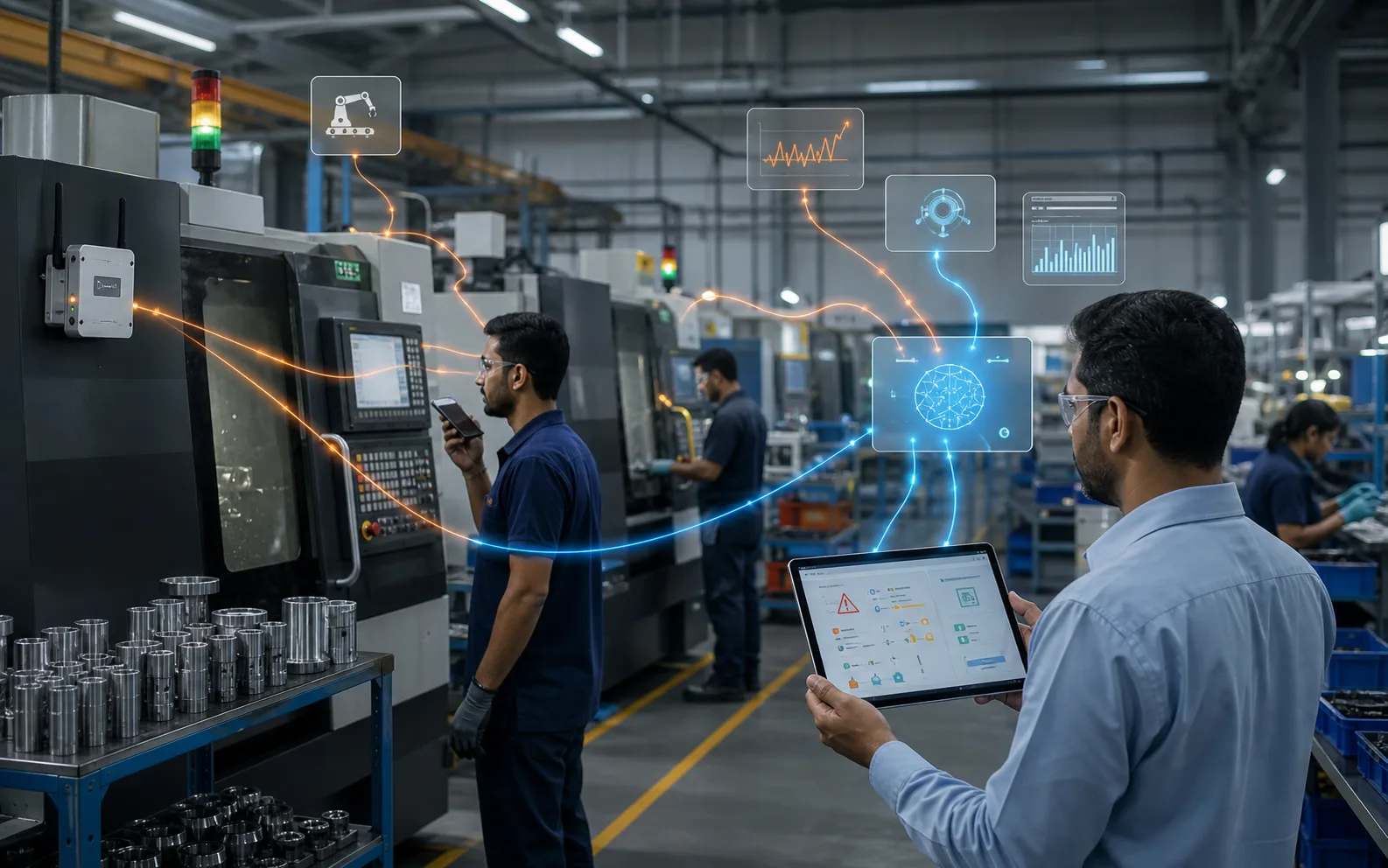

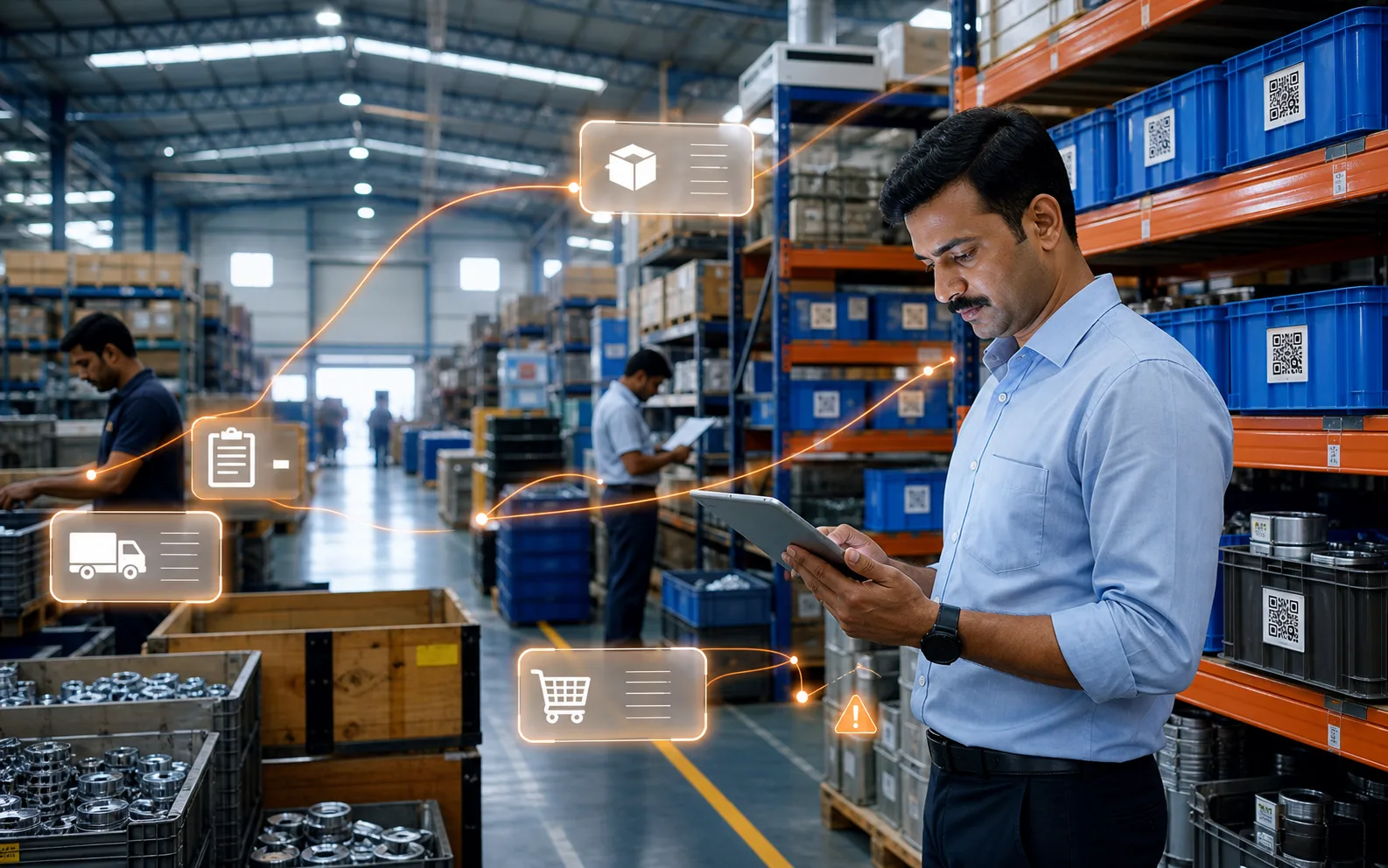
How Much Does an IoT Manufacturing Solution Cost?
Understand the real cost components of an IoT manufacturing solution, including sensors, gateways, software, integration, training, support, and ROI planning.
Loading Optiwise
A structured blog experience powered by the local AICAN CMS, with rich publishing, search visibility, and editorial control without WordPress.

Filter blog posts
1959 posts available, showing 1537-1560

Understand the real cost components of an IoT manufacturing solution, including sensors, gateways, software, integration, training, support, and ROI planning.

Learn how IoT systems can scale with manufacturing growth across machines, plants, users, dashboards, integrations, data volume, security, and business workflows.

Learn material reconciliation, why it matters, formula, process, common differences, and how Optiwise helps manufacturers compare issued, consumed, scrap, and closing stock.

Learn what manufacturing teams should be trained on before ERP go-live, including roles, workflows, master data, work orders, inventory, purchase, production, quality, reports, and support.

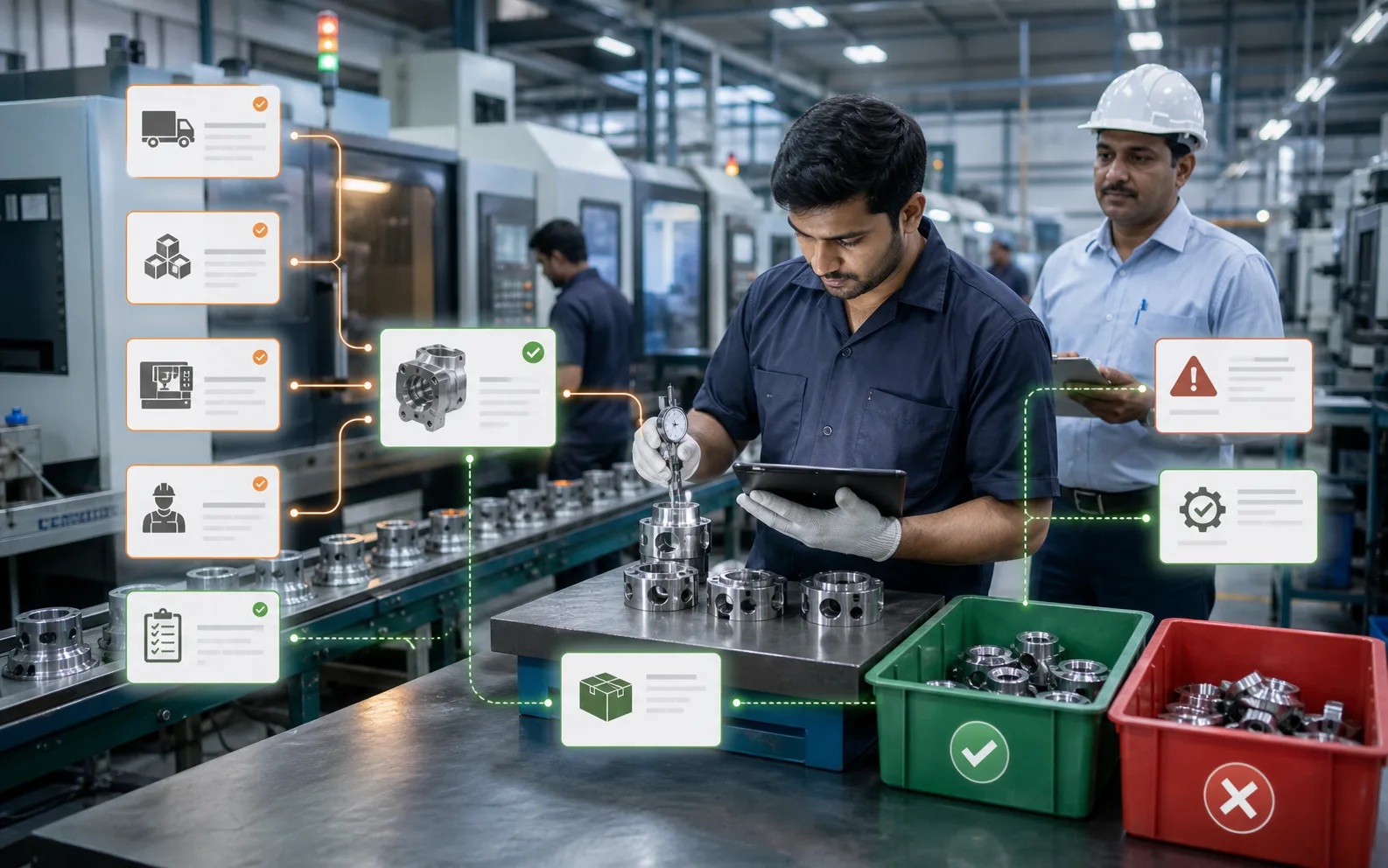
A practical inspection process audit guide for manufacturers, covering defect definitions, manual checks, rework, escaped defects, data gaps, inspection bottlenecks, and computer vision readiness.

Learn how to build a portfolio for manufacturing software jobs with ERP, inventory, production, quality, dashboards, APIs, and practical workflow projects.

Understand the difference between a sales order and invoice, who creates each document, when they are used, and why manufacturers need both.

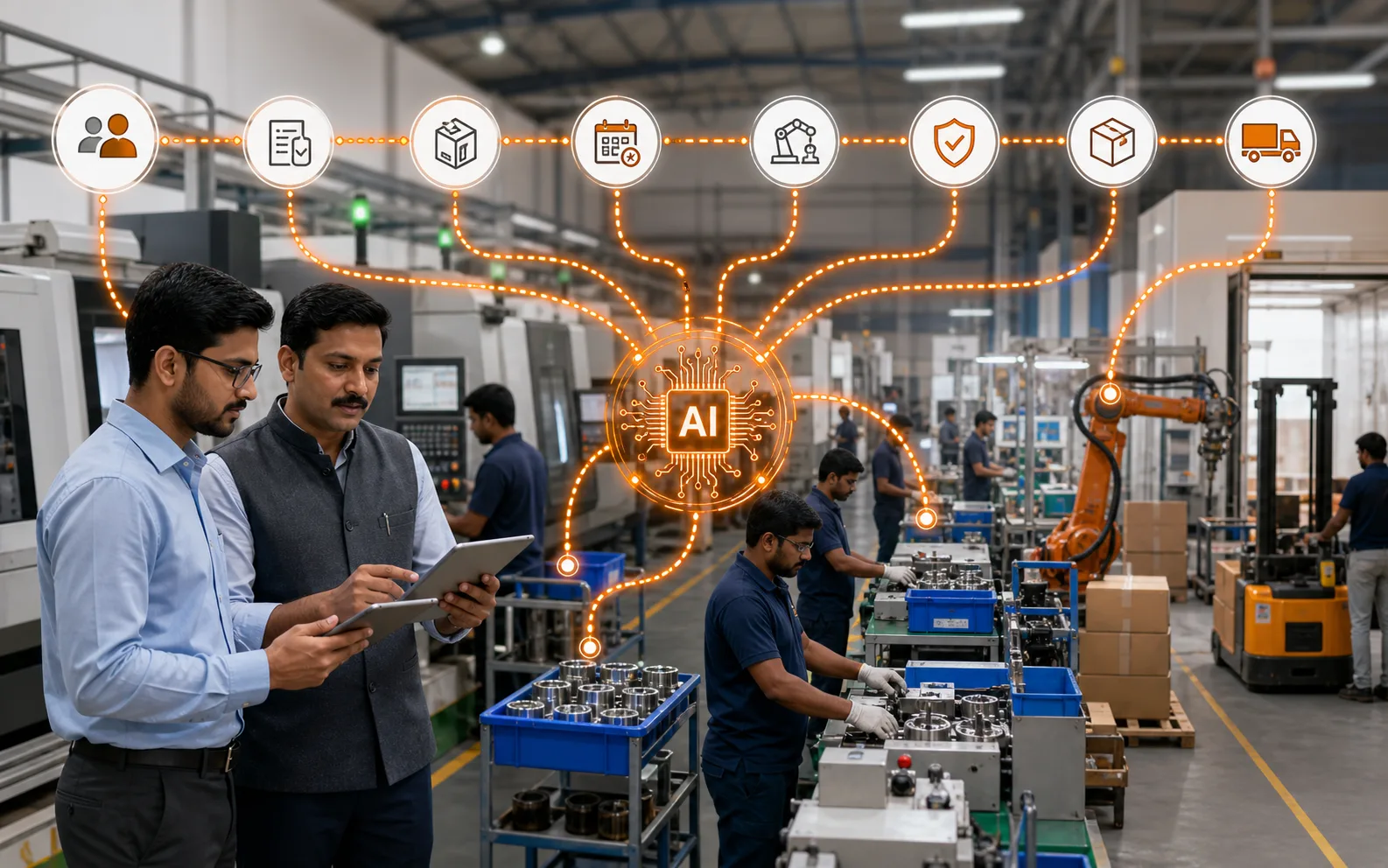
Learn how AI manufacturing works in practice, from data capture and ERP integration to AI analysis, alerts, human review, and workflow action.

Learn how IoT can monitor textile machines, including loom status, spindle performance, runtime, stoppage, downtime reasons, output, and ERP production context.

Learn how older factories can adopt modern AI technology without replacing every machine, starting with connected data, workflows, and phased implementation.

Learn what pipeline inventory means, why goods in transit matter, and how manufacturers can control purchase, production, and dispatch visibility.

Learn how ERP can support custom manufacturing with flexible jobs, quotation flow, BOM changes, material tracking, labor, QC, rework, and job costing.

Learn how inventory optimization helps manufacturers balance stock availability, cash flow, lead time, safety stock, demand, and production planning, with practical tips and Optiwise support.

Manufacturing workers will need new skills in digital tools, quality, machine awareness, data basics, safety, and problem-solving as AI enters factories.

Hidden AI agent costs can include setup, integrations, training, monitoring, corrections, security, workflow redesign, support, and tool management.

Learn how inventory teams can work faster using practical inventory tools even before AI, including barcode scanning, reorder alerts, reports, and stock discipline.

Explore supply chain software careers in manufacturing, including procurement systems, inventory, warehouse tools, logistics, analytics, supplier portals, and AI planning.

A practical change management guide for manufacturers implementing ERP, focused on adoption, training, ownership, user resistance, and daily workflow discipline.

Learn who the primary ERP users are in manufacturing, how owners, sales, purchase, inventory, production, accounts, and management use ERP, and how Optiwise supports connected workflows.

Learn how IoT helps manufacturers reduce energy consumption through machine-wise monitoring, idle load detection, energy-per-unit tracking, alerts, and production-linked analysis.

A practical buying checklist for industrial sensors covering use case, environment, accuracy, integration, durability, calibration, support, cost, and data reliability.

Understand the difference between job shop ERP and general manufacturing ERP, and how custom manufacturers should evaluate workflows, costing, scheduling, BOMs, and shop floor visibility.

Learn how ERP software supports electrical and electronics manufacturers with BOMs, component tracking, production, quality, inventory, purchase, and dispatch.

A practical guide for manufacturers on ERP ROI, including inventory reduction, fewer production delays, better job costing, faster reporting, purchase control, and working capital benefits.