
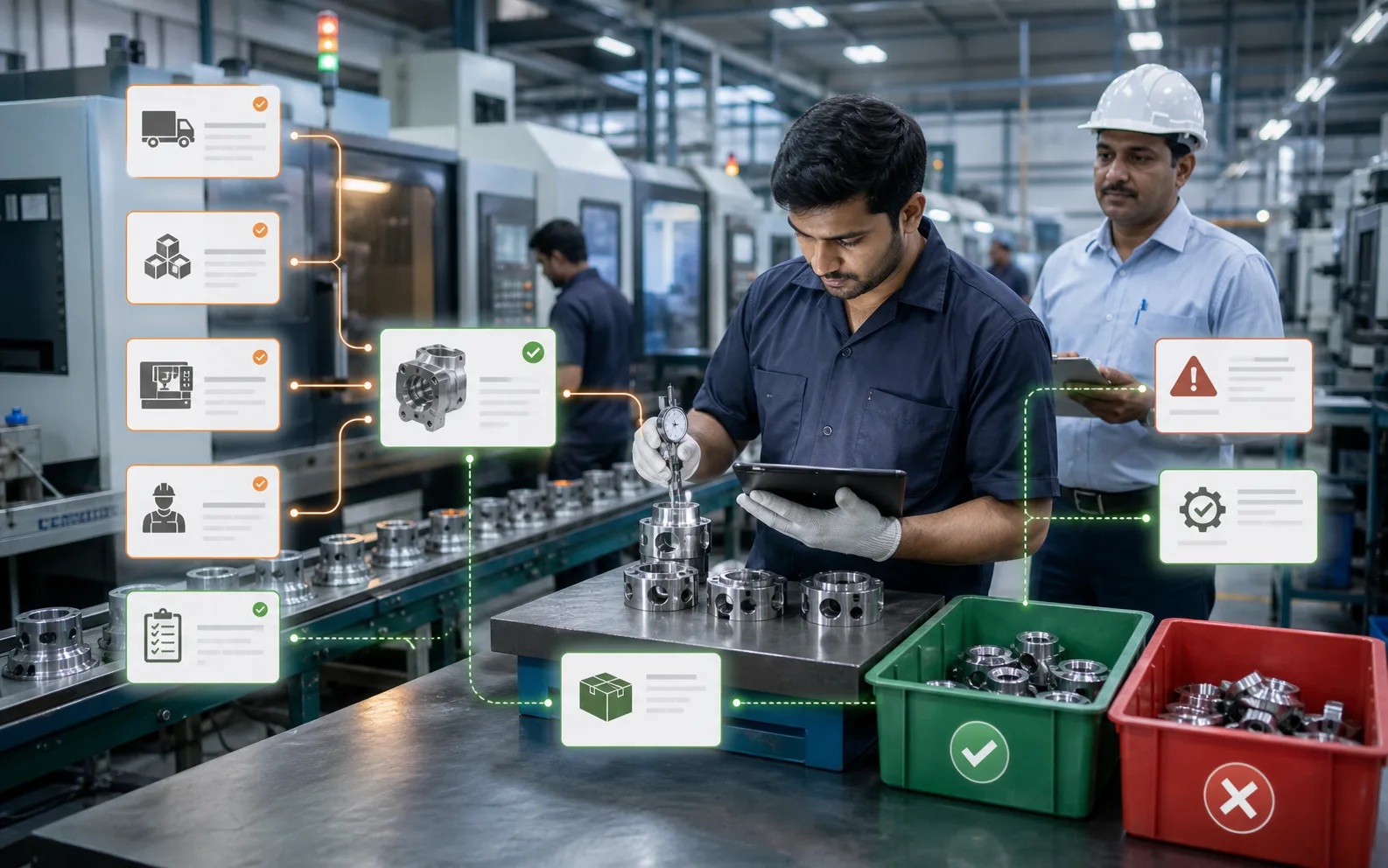
What Happens When Computer Vision Detects a Defect?
Learn the defect workflow after computer vision detection, including alerts, rejection, image evidence, operator review, quality escalation, ERP/MES updates, and root-cause action.
Loading Optiwise
A structured blog experience powered by the local AICAN CMS, with rich publishing, search visibility, and editorial control without WordPress.

Filter blog posts
1959 posts available, showing 1801-1824

Learn the defect workflow after computer vision detection, including alerts, rejection, image evidence, operator review, quality escalation, ERP/MES updates, and root-cause action.

Learn how manufacturers can improve production planning using demand visibility, material readiness, capacity planning, BOMs, WIP tracking, quality status, dispatch priorities, and ERP dashboards.

Learn what rolling inventory means, how rolling stock counts work, why manufacturers use them, and how ERP improves inventory accuracy without stopping operations.

Learn how small manufacturers can benefit from AI through reports, SOPs, inventory analysis, quality tracking, training, and ERP-connected insights.

Use this manufacturing ERP vendor comparison matrix to evaluate ERP vendors beyond demos, including production fit, inventory, purchase, quality, costing, support, pricing, and implementation.

Learn which procurement tasks AI can automate, which still need human judgment, and how manufacturers can use AI procurement tools responsibly.

Learn what production planning software does, key features manufacturers need, and how to choose a system that improves scheduling and material readiness.

Learn how to reduce unplanned downtime using preventive maintenance, predictive alerts, spare planning, downtime analysis, machine monitoring, and ERP visibility.

Learn how hard it is to switch ERP systems later, what makes migration difficult, how to reduce lock-in, and what manufacturers should check before choosing ERP.

Learn which programming languages are useful in manufacturing software careers, including Python, JavaScript, SQL, C#, Java, C/C++, ladder logic, and scripting.

Learn what manufacturing ERP software is, key features, benefits, selection checklist, mistakes to avoid, and how Optiwise supports Indian MSME manufacturers.

Learn five practical ways manufacturers can improve purchase order workflows, reduce delays, strengthen approvals, improve supplier control, and boost efficiency.

Learn how small businesses can get buy-in for ERP investment from owners, partners, managers, employees, and investors by focusing on pain, ROI, risk, and adoption.

Learn how industrial sensors improve manufacturing efficiency by making machine status, downtime, energy, quality, maintenance, and production data visible.

Learn how to evaluate defect detection accuracy in computer vision systems, including false rejects, missed defects, validation samples, lighting, and real production testing.

Learn how manufacturers can use AI with existing SAP systems through integration, data readiness, workflow alignment, and production planning use cases.

Avoid common manufacturing AI implementation mistakes including vague goals, poor data, no pilot, weak training, missing ownership, and unrealistic expectations.

Learn what training inventory teams need to use inventory software effectively, including stock workflows, scanning, reports, exceptions, and data accuracy.

Compare manufacturing tech salaries with big tech compensation and understand trade-offs in stability, impact, specialization, growth, and long-term opportunity.

Learn how Optiwise can help chemical manufacturers manage batches, formulas, raw materials, quality checks, traceability, inventory, production, costing, and dispatch.

Understand the difference between IoT and traditional factory automation, including machine control, data visibility, dashboards, alerts, integration, and decision-making.

Factories delay technology adoption due to cost concerns, poor data, unclear processes, resistance, lack of leadership, weak infrastructure, and fear of disruption.

AI agents can triage complex customer problems, gather context, suggest responses, and escalate to humans, but should not handle sensitive issues alone.

Learn how manufacturers should benchmark computer vision performance by industry using defect detection rate, false rejects, throughput, uptime, traceability, and ROI without relying on fake universal numbers.