

Workforce & Skill Development
ERP for Job Shops: Quote-to-Job Change Control
ERP for Job Shops: Quote-to-Job Change Control. Use a worked factory test, explicit inputs and exception checks before rollout.
6 Feb 20255 min read
Loading Optiwise
A structured blog experience powered by the local AICAN CMS, with rich publishing, search visibility, and editorial control without WordPress.

Filter blog posts
2013 posts available, showing 1945-1968
ERP for Job Shops: Quote-to-Job Change Control. Use a worked factory test, explicit inputs and exception checks before rollout.

Learn what stock discrepancy means, why inventory mismatches happen, how SMEs can investigate them, and how ERP improves stock accuracy.
Learn Material Requirements Planning, key inputs, steps, example, benefits, mistakes, and how Optiwise connects BOM, inventory, purchase, and production.
Learn how CNC workshops track production using job cards, machine schedules, operator updates, WIP movement, quality status, downtime reasons, and ERP dashboards.
Learn how manufacturers can streamline GST management with cleaner invoices, purchase records, ITC checks, e-way bill discipline, and connected ERP data.
A practical comparison of ERP and transaction-focused manufacturing tools for SME manufacturers, covering inventory, production, purchase, sales, finance, scalability, and control.
Understand CGST, SGST, and IGST in simple manufacturing terms, when each applies, invoice examples, and how Optiwise helps reduce GST document errors.
Learn how electronics manufacturers can reduce defects using BOM control, component traceability, process discipline, testing data, rework analysis, quality checkpoints, and ERP dashboards.

Understand finished goods, how they differ from raw materials and WIP, examples, accounting relevance, and how ERP improves finished goods control.
See how pharma companies manage batch production using ERP, from material planning and batch records to quality checks, traceability, expiry, and dispatch control.
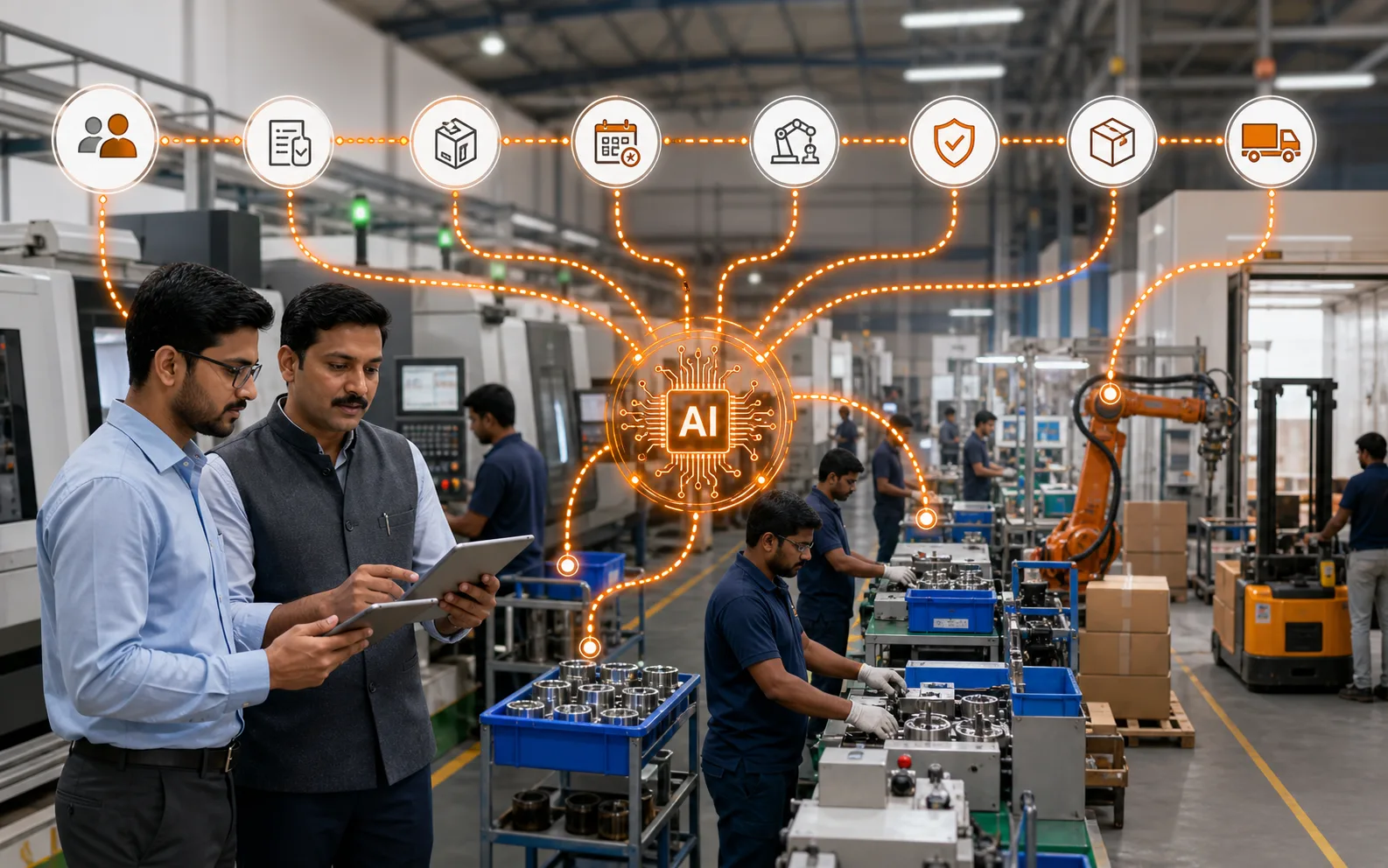
Factories succeed with automation when they define clear goals, clean data, train users, involve workers, integrate systems, and measure outcomes.
AI vs Automation in Manufacturing. Use a worked manufacturing test, exception checks and direct Optiwise workflow evidence before rollout.
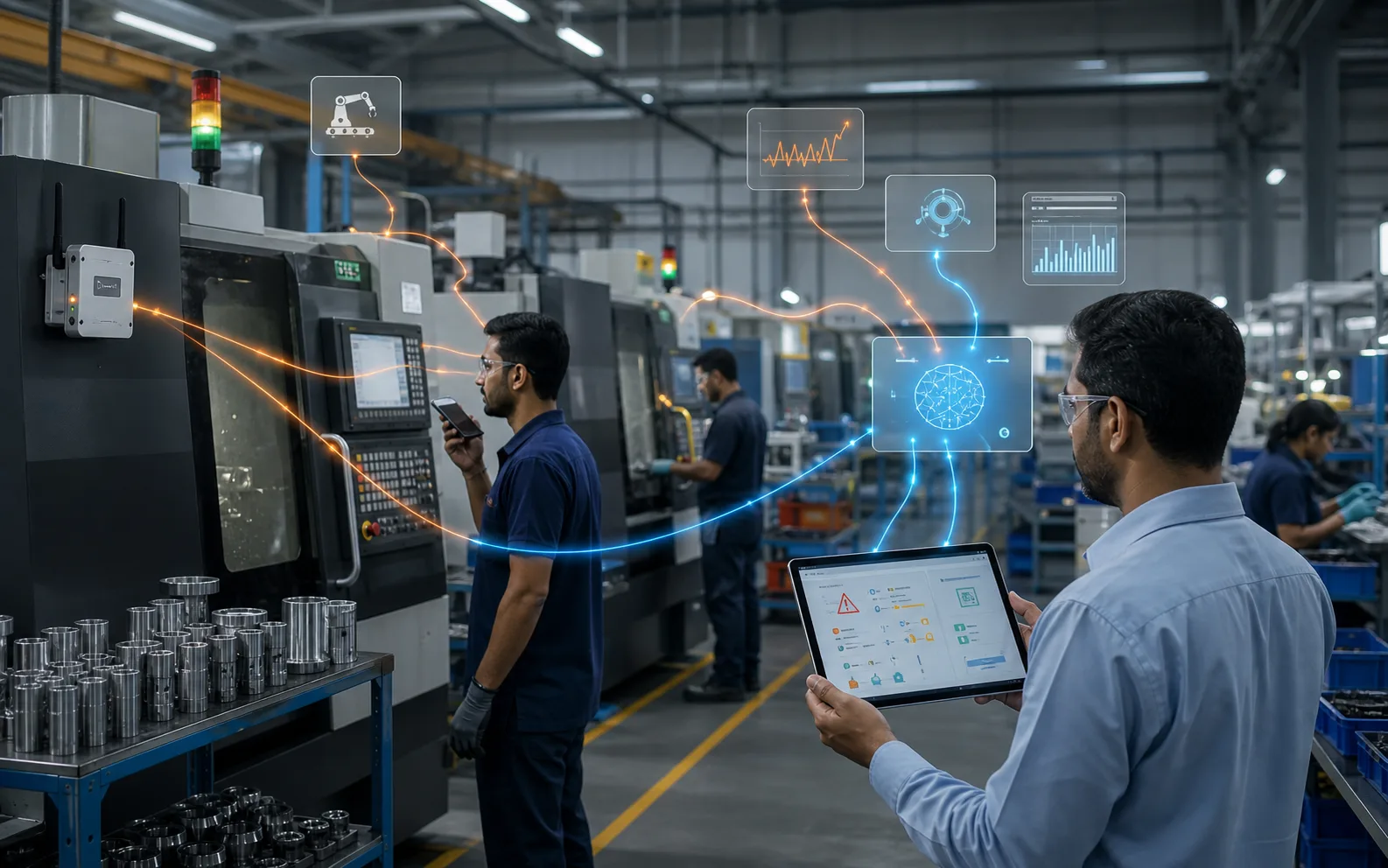
Explore practical manufacturing tasks AI can support today, including reporting, forecasting, quality analysis, inventory alerts, maintenance planning, and customer updates.
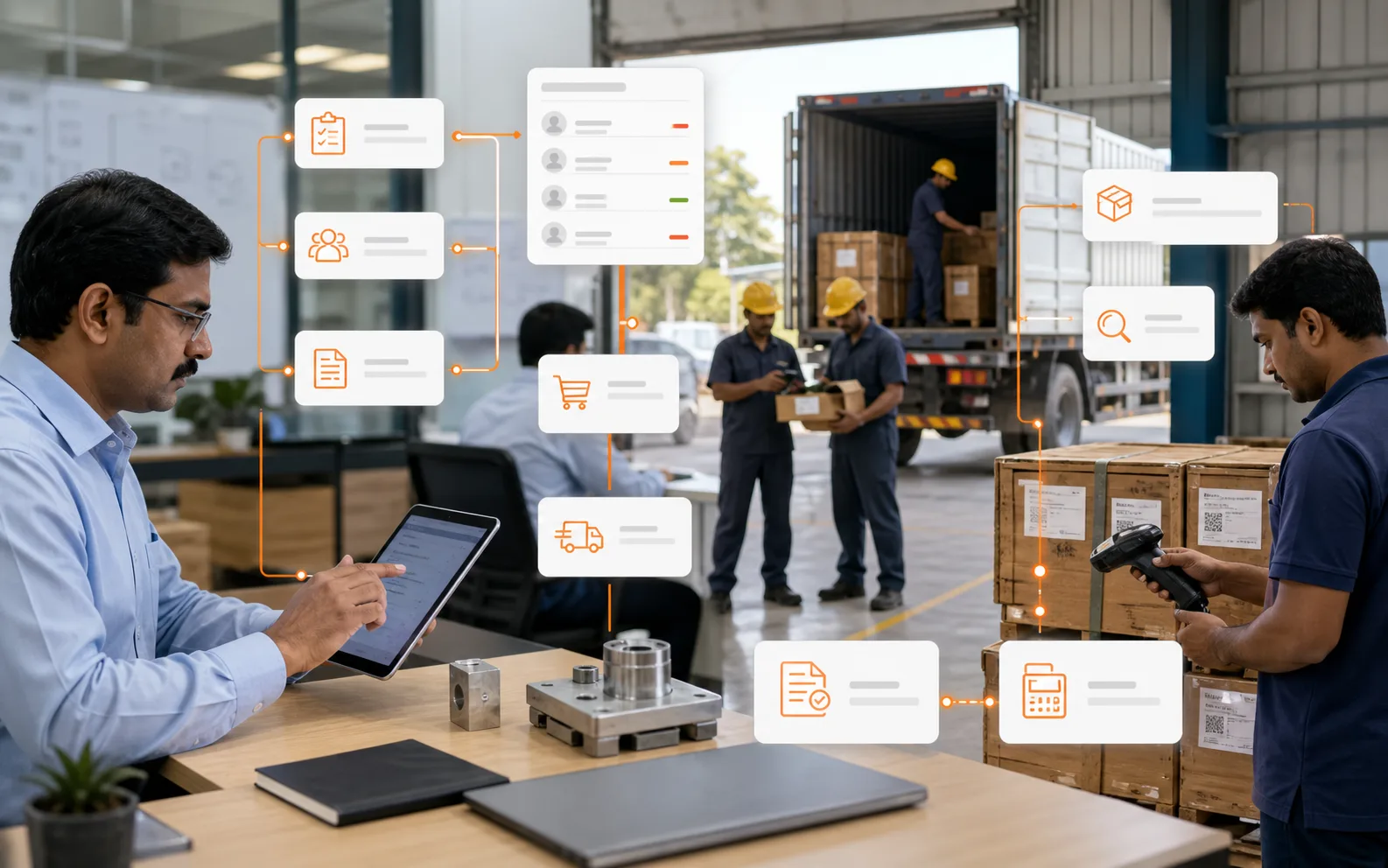
Learn how to choose purchase management software for SMEs, including purchase requests, approvals, vendor tracking, PO management, GRN, inventory linkage, and reporting.
Map AI quality-control improvement to inspection history, defect patterns, supplier or batch links, corrective actions and human disposition.
Learn what dead stock is, why it hurts manufacturers, how to identify it early, and how AICAN Optiwise helps prevent slow-moving inventory from becoming dead stock.
Learn the skills manufacturers need to work with AI, including process knowledge, data discipline, ERP literacy, AI prompting, review judgment, and change management.
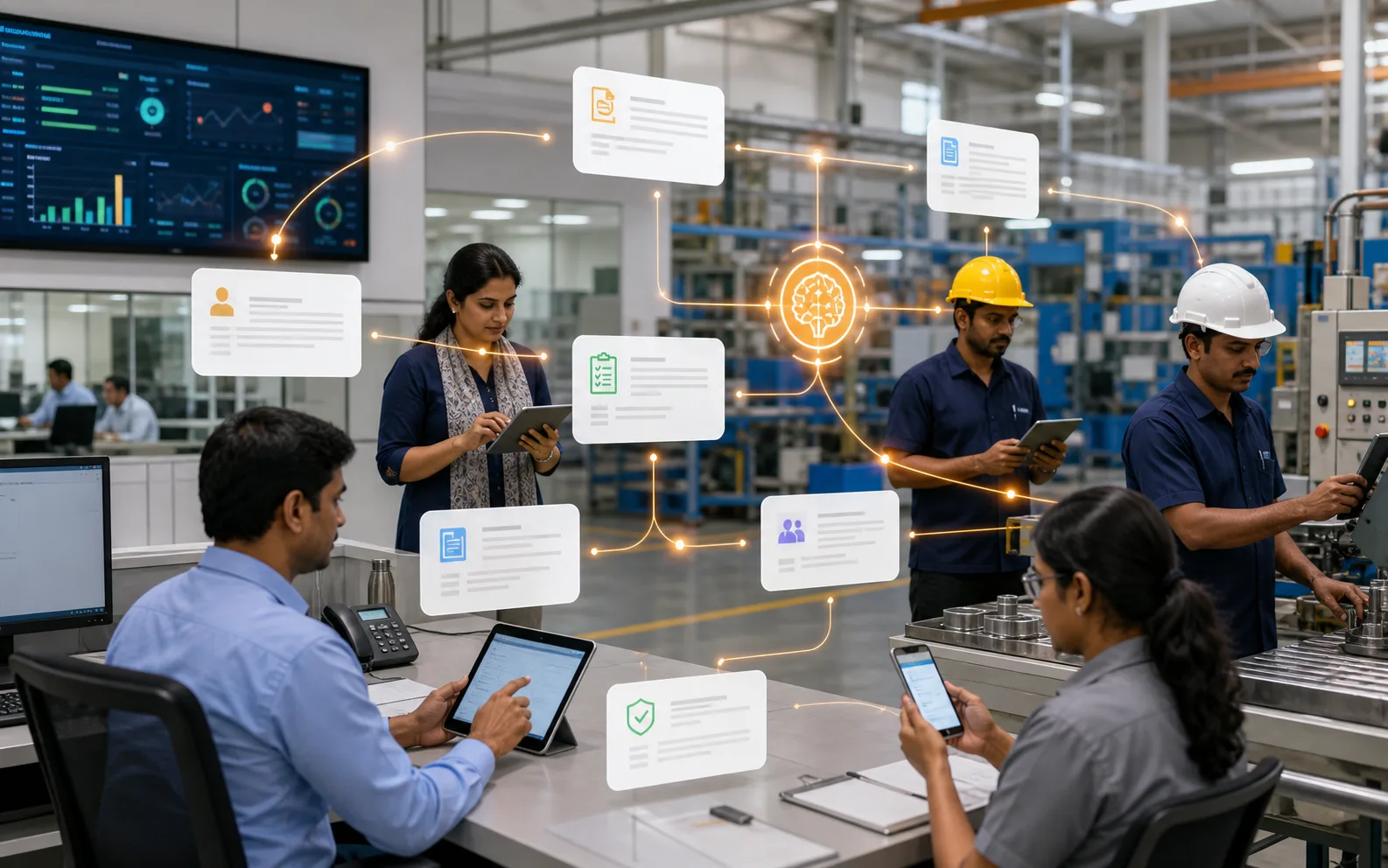
Factory workers should raise automation concerns about safety, training, job impact, data usage, workflow fit, human oversight, and support.
AI can help procurement teams find better suppliers faster by matching requirements, comparing capabilities, reviewing performance data, and flagging risk.
Manufacturing Inventory Module. Use a worked manufacturing test, explicit inputs and exception checks before rollout.
Learn which manufacturing data to organize before AI adoption, including item masters, production records, inventory movement, purchase data, quality, maintenance, and sales orders.
Learn how AI helps manufacturers find better parts and suppliers through vendor performance analysis, lead time risk, quality data, purchase history, and inventory visibility.
Learn how ERP improves supply chain management by connecting demand, inventory, purchase, production, suppliers, dispatch, finance, and reporting.
Manufacturing workers will need retraining in digital tools, quality, machine monitoring, safety, data basics, and problem-solving as AI changes factories.