
Delivery Note | Optiwise
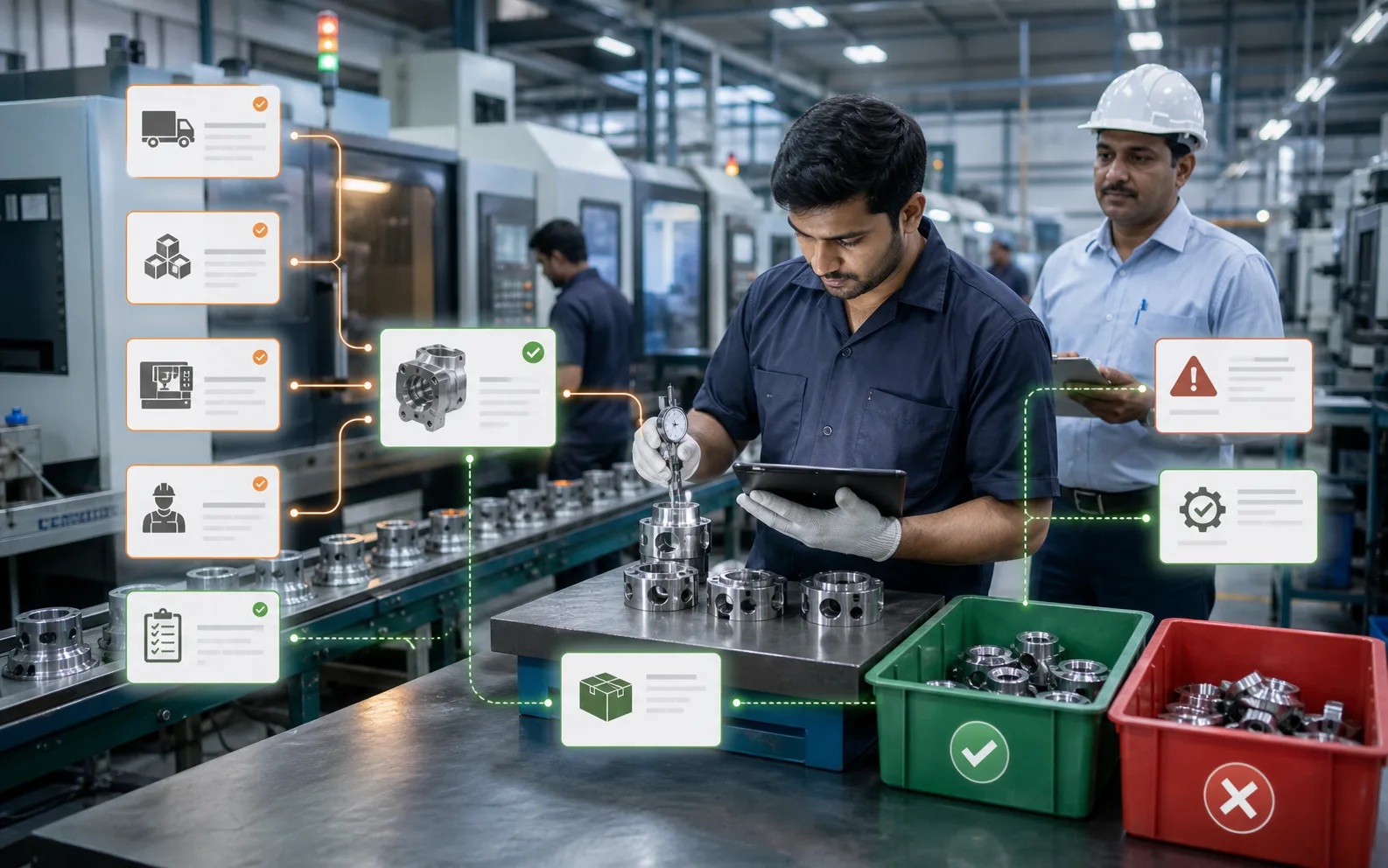
Understand what a delivery note is, how it differs from invoice and delivery challan, and how Optiwise helps manufacturers improve dispatch confirmation.
Loading Optiwise
A structured blog experience powered by the local AICAN CMS, with rich publishing, search visibility, and editorial control without WordPress.

Filter blog posts
1959 posts available, showing 1057-1080

Understand what a delivery note is, how it differs from invoice and delivery challan, and how Optiwise helps manufacturers improve dispatch confirmation.

A developer guide to traditional industries hiring tech talent, including manufacturing, logistics, construction, healthcare, and industrial software roles.

Learn how production planning software improves manufacturing efficiency through material readiness, better scheduling, capacity visibility, fewer delays, and connected teams.

Learn FSN analysis in inventory management, how to classify fast, slow, and non-moving stock, benefits, examples, and ERP reporting use.

Learn how to estimate computer vision savings in manufacturing by calculating scrap, rework, customer complaints, inspection labour, downtime, and delayed defect detection.

Learn shop floor planning for manufacturing SMEs, including scheduling, capacity, WIP, material availability, dispatch priorities, and ERP visibility.

Learn which sensors manufacturers may need for smart manufacturing, including current, proximity, vibration, temperature, pressure, flow, energy, barcode, RFID, and quality sensors.

Prepare for the future job market shaped by AI, automation, data, human judgment, continuous learning, hybrid roles, and domain-specific technology skills.

Avoid common inventory system implementation mistakes in manufacturing, from poor master data and weak training to unclear ownership and unrealistic timelines.

Learn how to track stitching line efficiency with ERP, including target vs actual output, WIP, bottlenecks, defects, rework, downtime, and operator productivity.

Learn when small manufacturers should use out-of-the-box ERP, when customization is justified, and how to control cost, risk, adoption, and long-term maintenance.

AI tools need maintenance: updated data, reviewed workflows, security checks, prompt improvements, integration monitoring, and performance measurement.

Learn how to design AI training programs for factory workers, including role-based learning, shopfloor examples, adoption support, and practical skills.

Learn how ERP job travelers work in manufacturing, including routing, work orders, material issue, operation tracking, labor, QC checkpoints, rework, and dispatch visibility.

Learn what factories should look for in inventory management software, including stock accuracy, reorder alerts, BOM links, warehouse control, purchase planning, and ERP integration.

Learn what to look for in ERP expiry management, including batch-wise stock, FEFO, near-expiry alerts, shelf-life tracking, dispatch control, and ageing reports.

Learn why manufacturers struggle with overstock and stockouts, and how better inventory data, planning, and AI-led systems can fix the cycle.

Learn how ERP data migration works, what data to migrate, common mistakes, and how manufacturers can prepare clean data for a successful ERP implementation.

Learn how industrial sensor data is collected, cleaned, contextualized, analyzed, and converted into practical manufacturing decisions.

Use these ERP software selection criteria to evaluate fit, modules, implementation, scalability, cost, support, security, reporting, and industry workflows.

Compare AI agent cost with hiring employees by considering salary, benefits, training, software, setup, oversight, task type, and business risk.

Learn how foundries can monitor furnaces remotely using IoT telemetry, heat numbers, furnace status, downtime, process alerts, maintenance, quality results, and ERP dashboards.

Compare web-based ERP and desktop software for small manufacturers across access, updates, cost, security, collaboration, scalability, and daily usability.

Learn how to estimate the payback period for inventory software using savings from stockouts, excess stock, time saved, fewer errors, and better purchasing.