
What Are the Main Types of Industrial Automation Sensors?
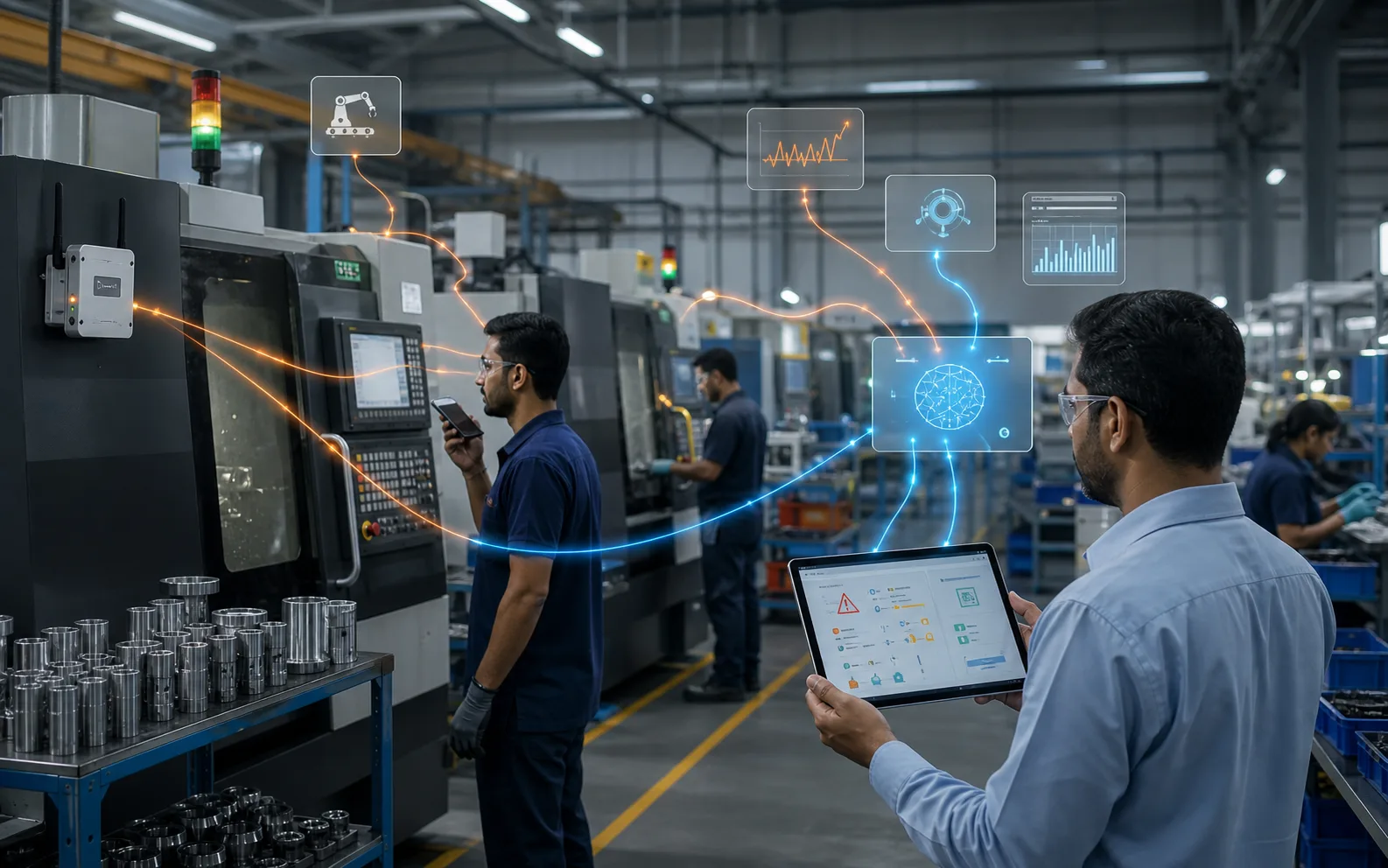
Explore the main types of industrial automation sensors used in factories, including proximity, photoelectric, pressure, temperature, vibration, current, flow, level, and vision sensors.
Loading Optiwise
A structured blog experience powered by the local AICAN CMS, with rich publishing, search visibility, and editorial control without WordPress.

Filter blog posts
2013 posts available, showing 1249-1272

Explore the main types of industrial automation sensors used in factories, including proximity, photoelectric, pressure, temperature, vibration, current, flow, level, and vision sensors.

Build a one-page AI business case for manufacturing around one painful workflow, evidence of delay, pilot scope, owner, approval rule and stop/go criteria.

A practical list of ERP vendor questions for small businesses covering workflows, cost, support, implementation, data migration, customization, security, scalability, and contracts.

Give manufacturers an AI cost checklist covering software, data cleanup, devices, integration, training, support and internal owner time without guessing vendor prices.

Learn which jobs require human judgment that AI cannot fully replace, including safety, quality, leadership, negotiation, production planning, and ethical decisions.

Learn what affects industrial sensor installation difficulty, from machine age and wiring to mounting, calibration, integration, and operator adoption.

A detailed guide to sundry debtors management for SMEs covering credit policy, ageing reports, overdue follow-up, dispute control, cash flow, and ERP visibility.

Learn a practical roadmap for moving from manual factory operations to sensor-based automation without overwhelming teams or disrupting production.

Learn what it really costs to implement ERP for manufacturing, including software, setup, customization, data migration, training, integrations, support, and hidden operational costs.

Learn scenario planning for manufacturing SMEs, including demand, inventory, production, supplier, cash flow, and capacity scenarios with practical examples.

Understand the real cost components of manufacturing IoT projects, including sensors, gateways, software, integration, training, support, customization, and expansion.

Learn Total Quality Management for manufacturing SMEs, including principles, benefits, examples, implementation steps, common mistakes, and how ERP supports quality visibility.

Learn how to choose the right ERP system by evaluating workflows, manufacturing needs, scalability, reporting, implementation support, data migration, and team adoption.

Learn how ERP helps electronic manufacturing services companies manage customer orders, BOMs, components, kitting, SMT, assembly, testing, rework, quality, and dispatch.

Learn how to reduce VMC breakdowns through preventive maintenance, spindle monitoring, tool management, coolant checks, operator discipline, downtime analysis, and ERP visibility.

Compare Optiwise and TallyPrime for manufacturing inventory. Connect stock, production demand, quality and purchasing in Optiwise.

Learn how BOM management software helps SME manufacturers control product structures, material planning, costing, revisions, production, and ERP workflows.

Manufacturing ERP Value: Measure Before Claiming Payback. Use a worked factory scenario, explicit inputs and exception checks before rollout.

Learn how to optimize a production management system with dashboards, exception alerts, shop floor data, bottleneck control, and continuous improvement.

Understand how AI affects factory headcount, which roles may change, and how manufacturers can improve productivity without damaging workforce trust.

Learn how AI helps small manufacturers compete with larger companies through visibility, quality, inventory control, faster decisions, planning, and customer responsiveness.

Learn how AI can work with existing manufacturing equipment using ERP data, maintenance history, machine logs, sensors, manual inputs, and phased integration.

Learn how manufacturing teams can secure executive buy-in for computer vision investments with a strong business case, ROI model, risk reduction, pilot plan, and operational evidence.

Learn how manufacturers can prove factory performance improvement with baseline metrics, planned vs actual reports, downtime, quality, WIP, delivery, and cost data.