

Inventory & Supply Chain
Seasonal Inventory | Optiwise
Learn what seasonal inventory is, how manufacturing SMEs can plan it, avoid stockouts and overstock, and use ERP for better seasonal demand control.
5 Aug 20254 min read
Loading Optiwise
A structured blog experience powered by the local AICAN CMS, with rich publishing, search visibility, and editorial control without WordPress.

Filter blog posts
2013 posts available, showing 1273-1296
Learn what seasonal inventory is, how manufacturing SMEs can plan it, avoid stockouts and overstock, and use ERP for better seasonal demand control.
Calculate inventory turnover with consistent COGS and average inventory periods, plus raw-material and finished-goods limits for manufacturers.
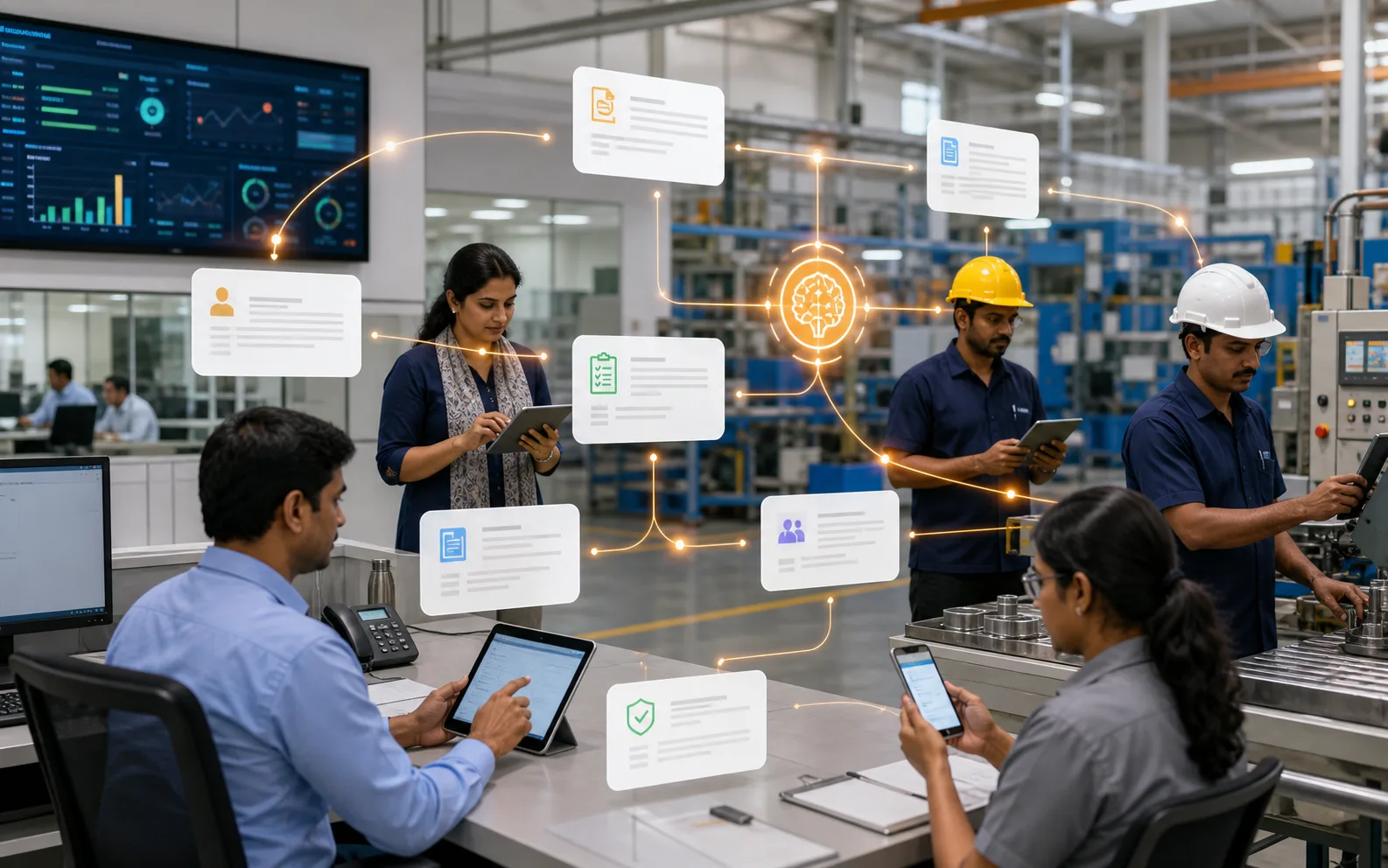
You do not need deep technical skills to use AI agents, but you do need clear workflows, basic digital confidence, good data, and human review habits.
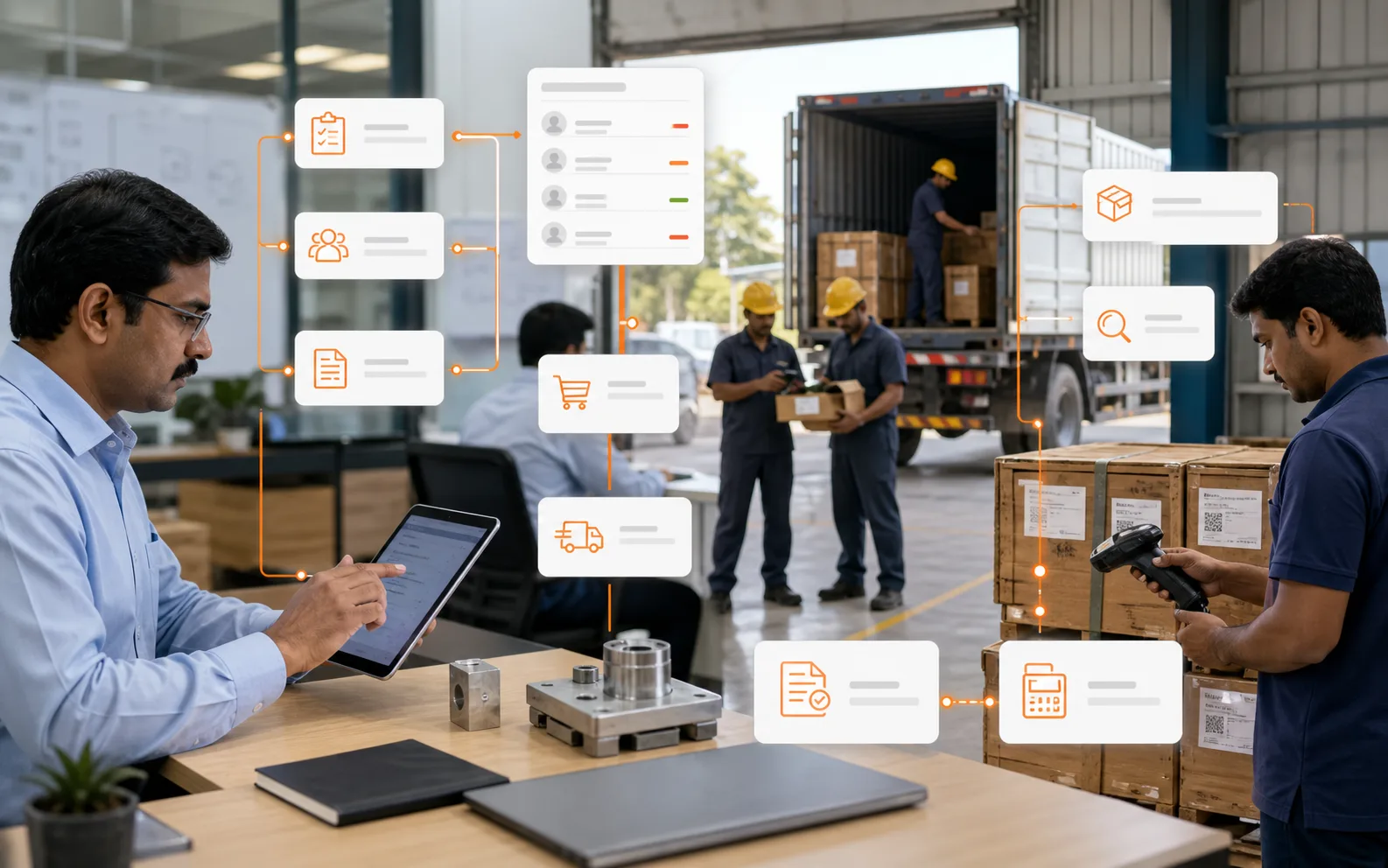
Understand SAC code meaning, why it matters under GST, how service providers use it in invoices, and how manufacturers can manage service classification more carefully with Optiwise.
Understand barcode technology, how it works, where manufacturers use it, and why ERP-connected barcode workflows improve inventory accuracy and traceability.
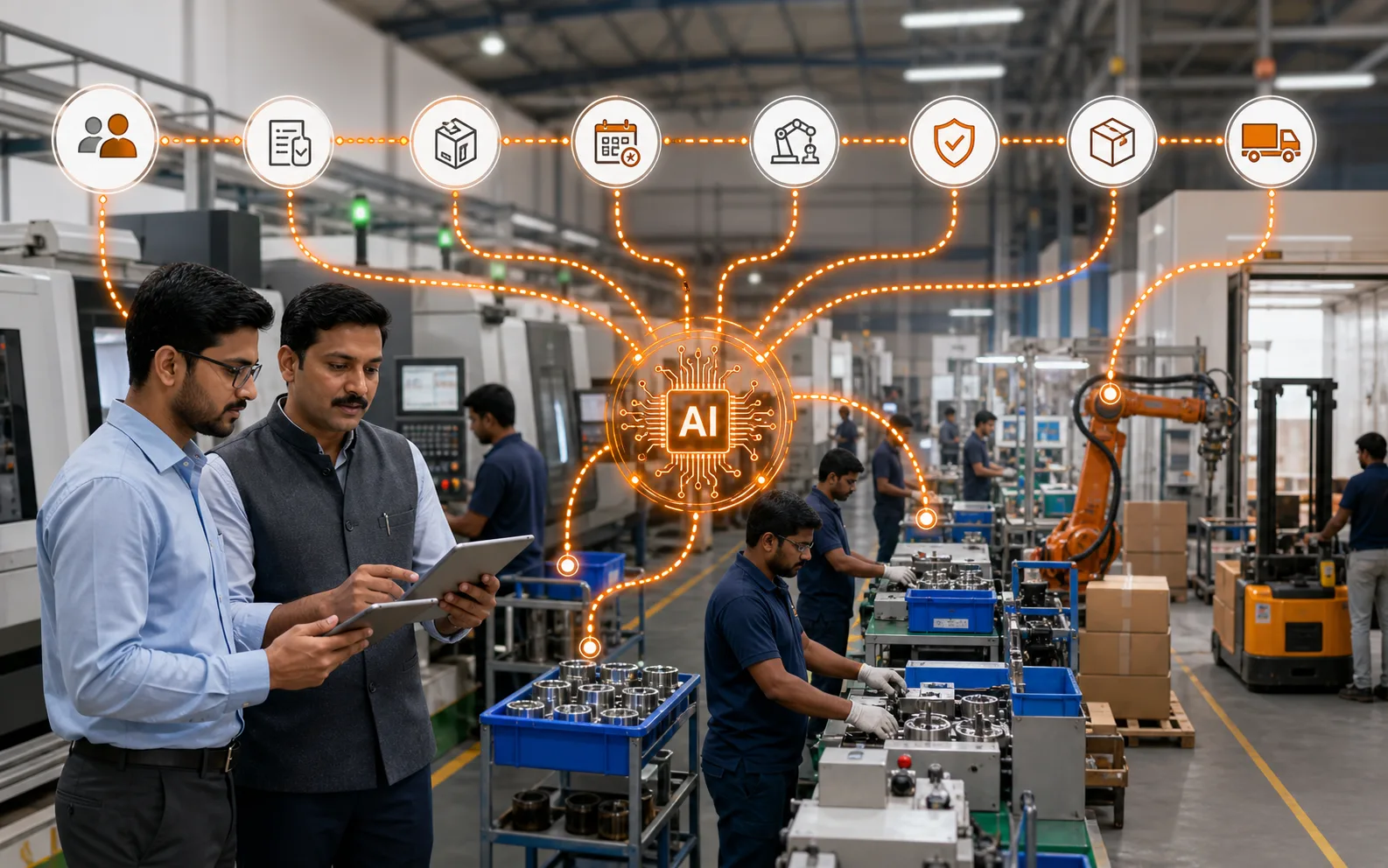
Learn how AI can reduce machine downtime through failure pattern detection, maintenance history, spare planning, production impact analysis, and predictive alerts.
MRP Benefits for Manufacturers. Use a worked manufacturing test, explicit inputs and exception checks before rollout.
Learn how industrial sensors help optimize production lines by revealing bottlenecks, downtime, speed loss, quality drift, utility waste, and real-time performance gaps.
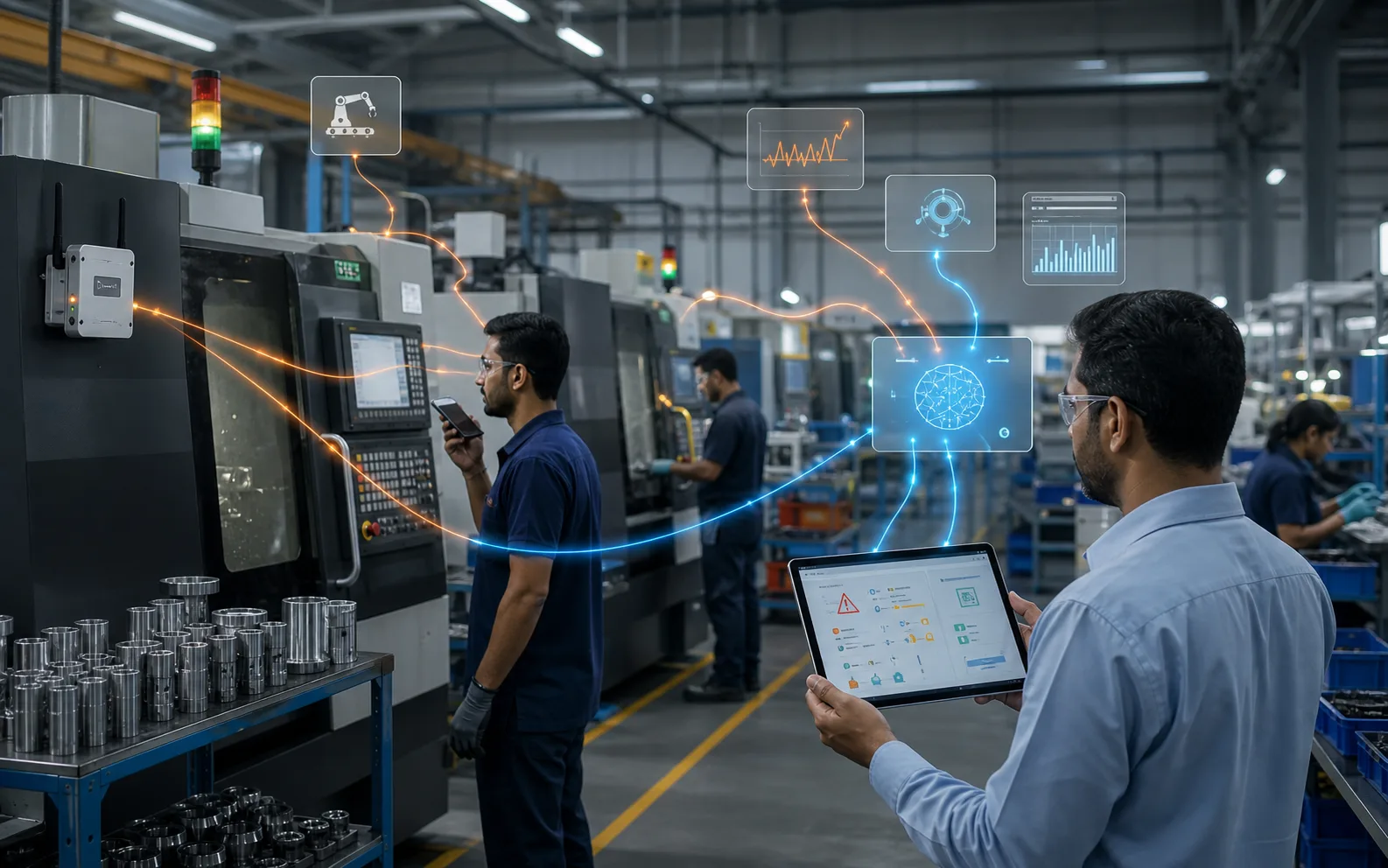
Estimate downtime cost without double counting lost contribution, delayed recoverable output, overtime, scrap and fixed overhead.
Learn how furniture manufacturers can reduce wood wastage with better BOMs, cutting plans, stock visibility, offcut tracking, production discipline, rework control, and ERP reporting.

Learn how manufacturers can set up automatic production alerts for delays, downtime, material shortages, quality holds, WIP issues, and dispatch risks.
Learn how to choose the right manufacturing software vendor by evaluating domain fit, implementation support, scalability, integrations, training, and ROI.
Practical lessons supply chain managers wish they knew earlier about inventory visibility, supplier risk, data quality, and manufacturing planning.
Learn how CNC shops can monitor multiple machines from one dashboard with live status, job progress, spindle runtime, idle reasons, alerts, and ERP-connected production visibility.
Explore practical MRP use cases for manufacturers, including material planning, purchase planning, BOM-based requirements, shortage control, and production readiness.
A practical guide to choosing cloud ERP software for manufacturers, covering workflows, integrations, security, scalability, implementation, and vendor fit.

A practical ERP migration guide for manufacturers covering data cleanup, process mapping, user training, phased rollout, testing, go-live, and post-migration support.
Learn how furniture manufacturers can monitor CNC routers using job schedules, machine utilization, cutting programs, downtime, output, quality, maintenance, wastage, and ERP dashboards.
Learn what software engineers do in manufacturing: ERP, integrations, dashboards, automation, IoT, quality systems, shopfloor tools, data pipelines, and AI workflows.
AI agents can improve employee satisfaction by reducing repetitive work, overtime, manual follow-ups, reporting burden, and task confusion.
Learn how to improve food plant efficiency using ERP visibility across planning, inventory, recipes, batches, quality, downtime, wastage, and dispatch.
A clear, practical guide for manufacturing teams on how AI changes work, which tasks may be automated, which human skills remain valuable, and how to prepare.
Learn how barcode inventory software improves tracking, stock accuracy, batch traceability, goods receipt, material issue, and dispatch control.
Learn how AI is changing factory work today through reporting, quality, maintenance, planning, inventory, training, safety, and shopfloor visibility.