
ERP & Digital Transformation
Marginal Cost | Optiwise
Learn marginal cost, formula, examples, why it matters in manufacturing, limitations, and how Optiwise improves cost visibility through production and inventory data.
13 Jul 20253 min read
Loading Optiwise
A structured blog experience powered by the local AICAN CMS, with rich publishing, search visibility, and editorial control without WordPress.

Filter blog posts
2013 posts available, showing 1345-1368
Learn marginal cost, formula, examples, why it matters in manufacturing, limitations, and how Optiwise improves cost visibility through production and inventory data.
Learn how to choose the right inventory management tool by comparing workflow fit, stock accuracy, production integration, forecasting, support, and ROI.
A practical guide for manufacturers on adopting ERP without unnecessary disruption, using phased implementation, workflow mapping, user training, and gradual process improvement.
Control subcontracting with material issue, vendor-held stock, service orders, challans, partial returns, QC and finished-goods receipt.
Red flags of poor factory technology implementation include unclear goals, weak training, bad data, low adoption, duplicate work, and ignored worker feedback.
Avoid common manufacturing AI mistakes, including unclear use cases, poor data, weak training, no human review, security gaps, and over-automation.
Learn the biggest ERP implementation mistake manufacturers make, why it happens, and how to avoid failed adoption, bad data, over-customization, and weak process ownership.
Learn material handling equipment types, examples, selection factors, safety and efficiency tips, and how Optiwise improves movement and inventory visibility.
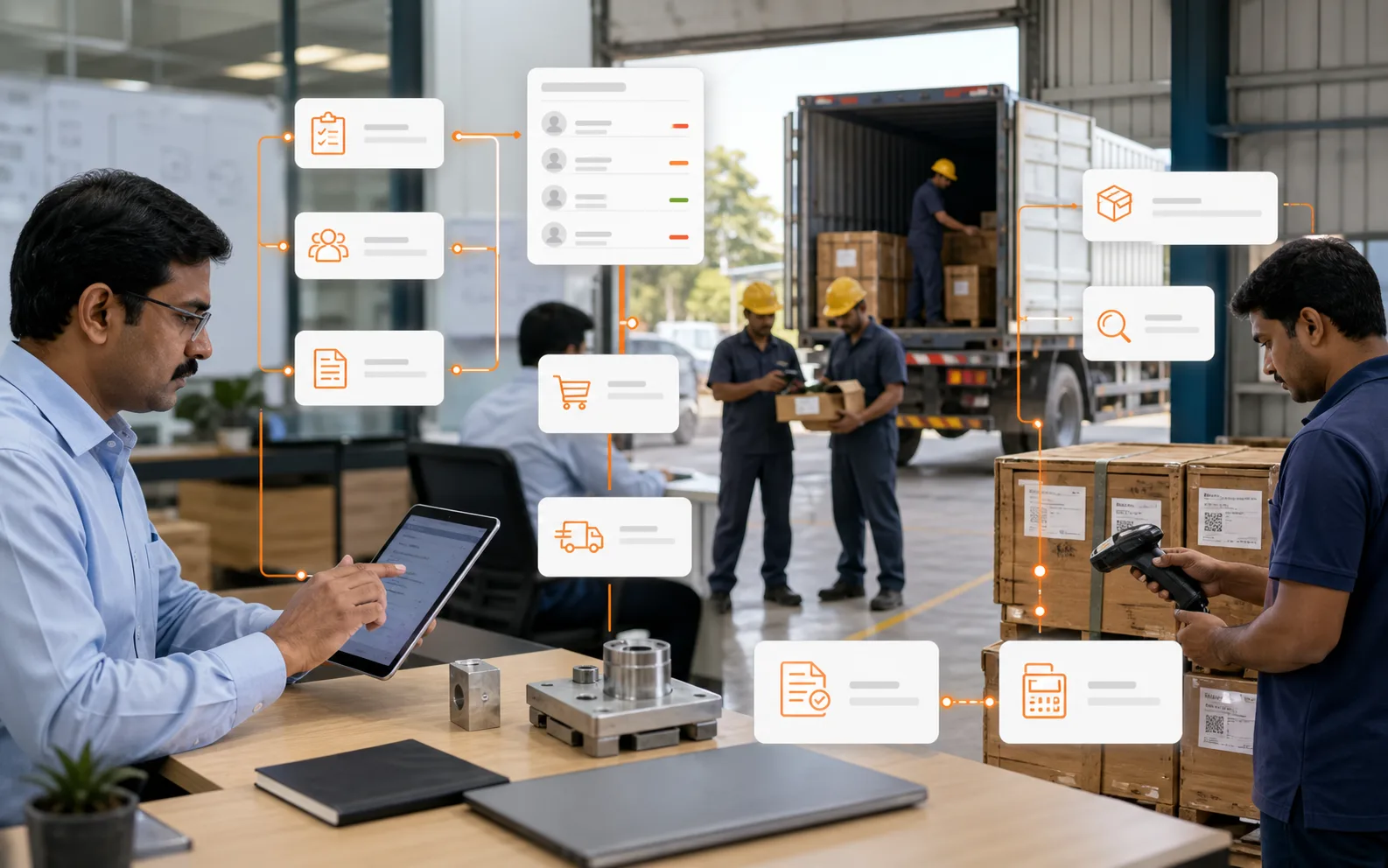
Understand e-invoice under GST, IRN, QR code, applicability, common manufacturing mistakes, and how AICAN Optiwise helps keep invoice data clean.
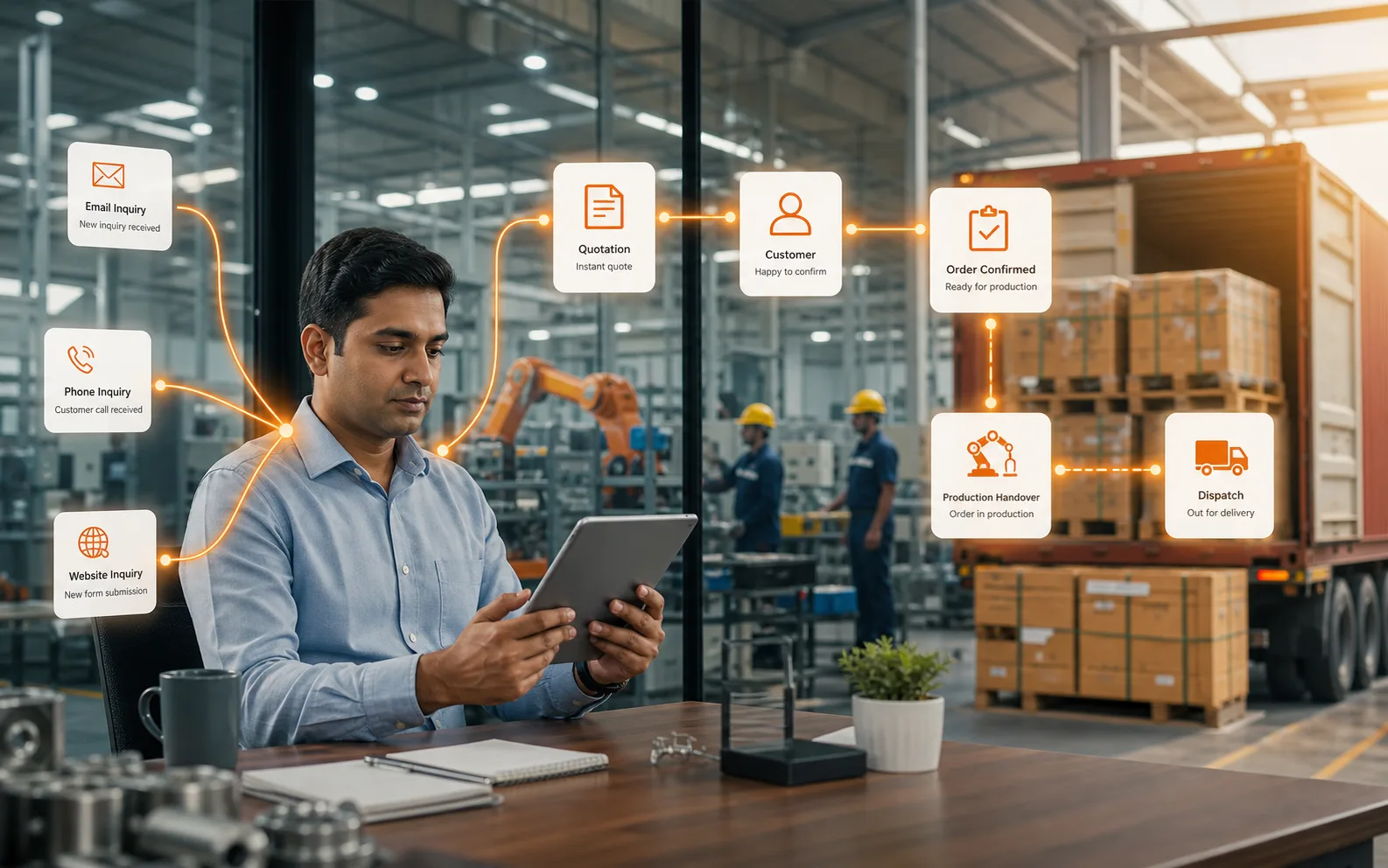
ERP for Industrial Machinery Manufacturing. Use a worked manufacturing test, exception checks and direct Optiwise workflow evidence before rollout.
Learn realistic timelines for setting up AI in a factory, including readiness, data preparation, rollout, training, go-live, and stabilization.
ERP for PCB Manufacturing. Use a worked manufacturing test, explicit inputs and exception checks before rollout.

Define the records, ownership, mapping, retry behavior and reconciliation needed for a manufacturing-to-Tally integration before approving its scope.
Learn what metal fabrication ERP software should include: quoting, BOM, nesting inputs, purchase, inventory, WIP, job costing, quality, dispatch, and Optiwise workflows.
Learn why accurate inventory levels matter for SMEs, how stock errors affect sales, production, purchase, cash flow, and how ERP improves accuracy.
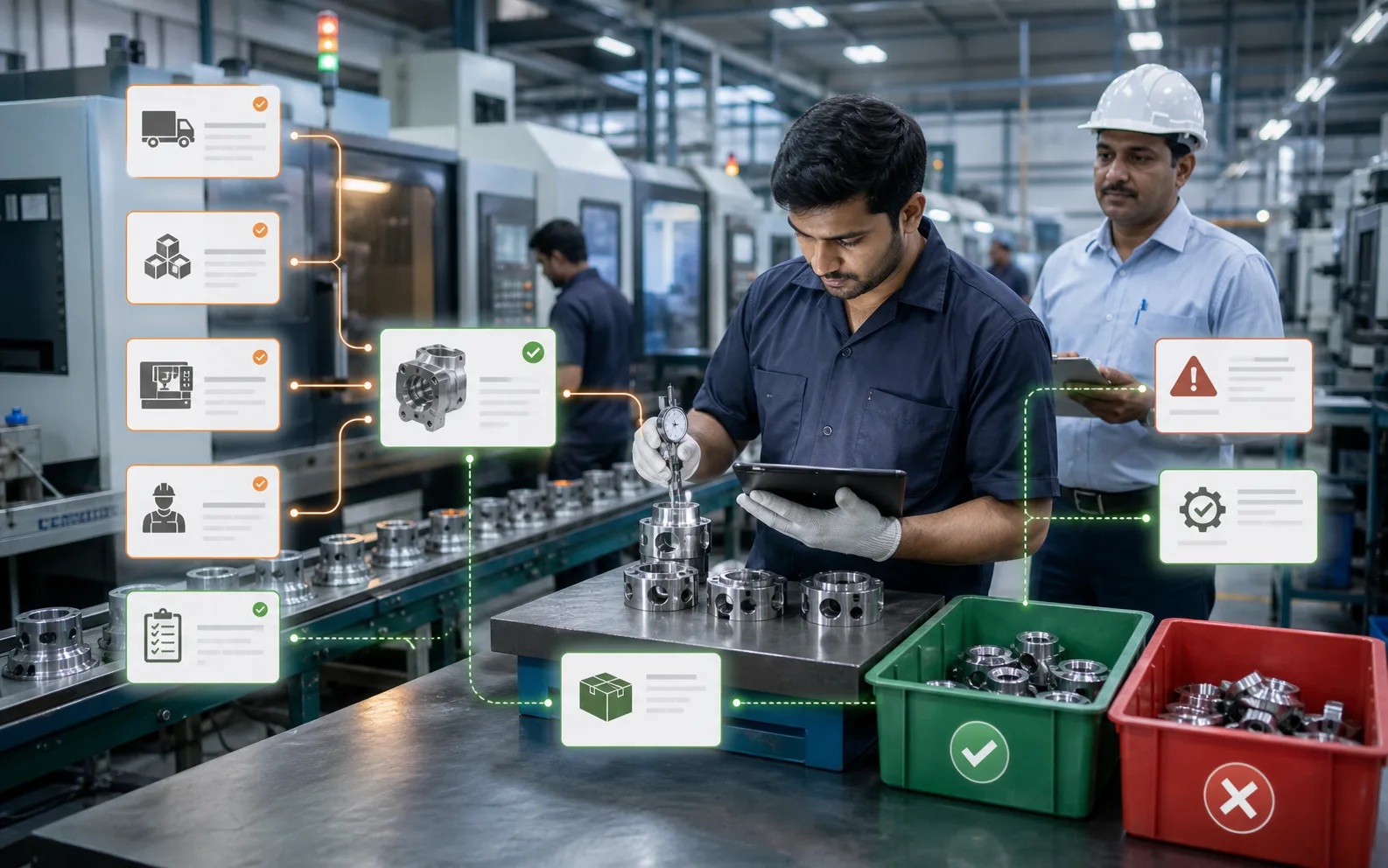
Learn when manufacturers need industrial cameras for computer vision inspection and when standard cameras may not be enough for accuracy, speed, lighting, and reliability.
Learn how manufacturers can monitor CNC machines remotely using machine status, job schedules, downtime, utilization, alerts, maintenance, quality, and ERP dashboards.
Learn how IoT and ERP can help packaging plants reduce downtime by tracking machine status, stoppage reasons, changeovers, maintenance, material issues, quality holds, and line efficiency.
A practical migration guide for manufacturers moving from Excel spreadsheets to ERP, covering inventory, purchase, production, quality, reporting, data cleanup, and phased adoption.
Learn realistic AI procurement software setup timelines for manufacturers, including data cleanup, workflow mapping, training, pilot rollout, and go-live.
Learn how AI can reduce production downtime, what affects results, which metrics to track, and how factories should implement downtime reduction practically.
Learn how omnichannel inventory management helps manufacturers and distributors maintain one stock truth across dealers, marketplaces, direct sales, warehouses, and service channels.
Manufacturing Inventory Control. Use a worked manufacturing test, explicit inputs and exception checks before rollout.
Compare AI solutions for small, mid-sized, and large factories, and learn how manufacturers should choose AI based on scale, data, workflows, and ROI.