
Real Procurement Teams Share Their AI Success Stories
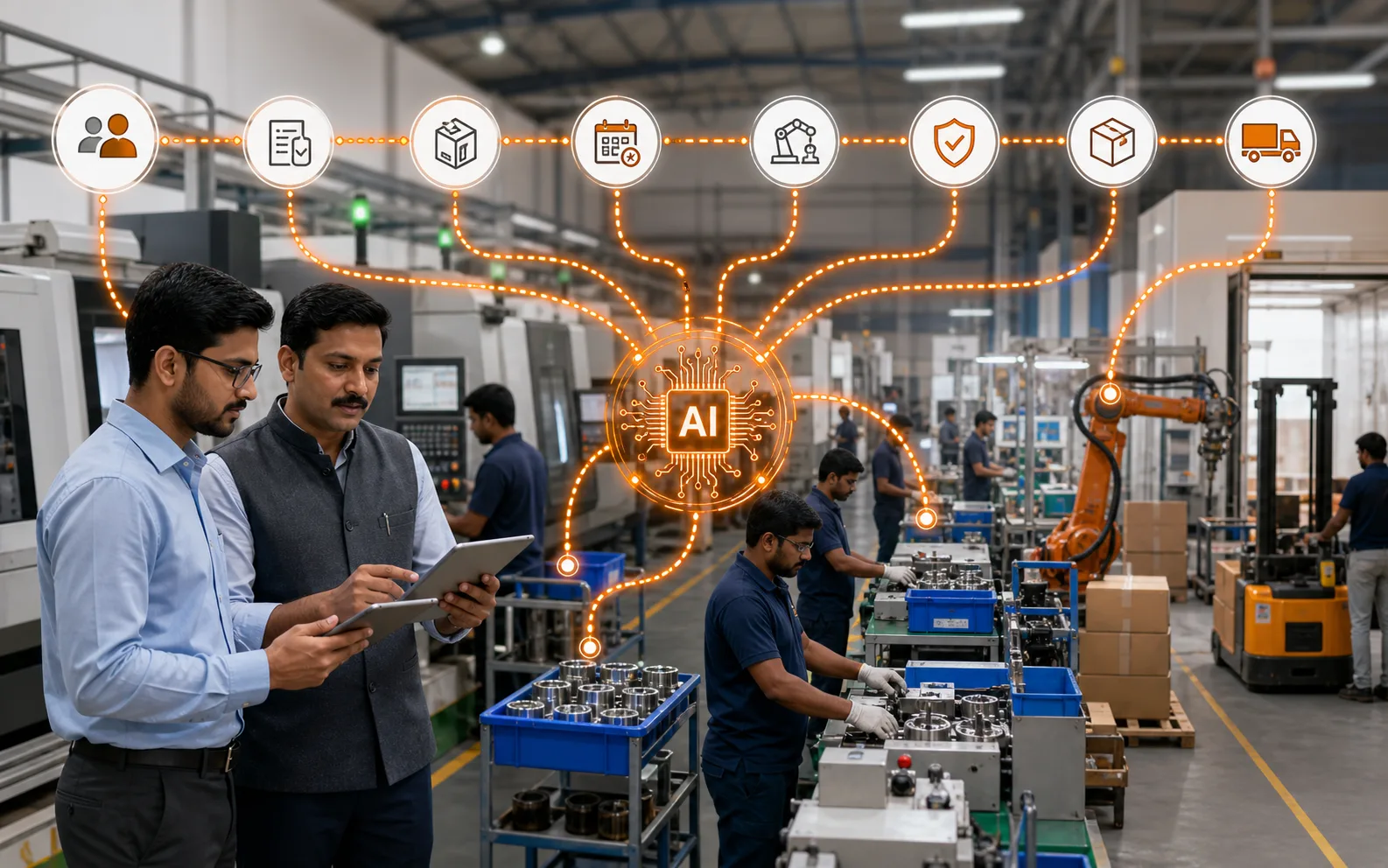
Real procurement AI success stories usually involve less manual work, faster quote comparison, better supplier visibility, and fewer urgent purchase surprises.
Loading Optiwise
A structured blog experience powered by the local AICAN CMS, with rich publishing, search visibility, and editorial control without WordPress.

Filter blog posts
1959 posts available, showing 1321-1344

Real procurement AI success stories usually involve less manual work, faster quote comparison, better supplier visibility, and fewer urgent purchase surprises.

Learn what small businesses should fix before ERP implementation: messy data, unclear workflows, duplicate item codes, weak approvals, poor reporting, and team ownership.

Learn consignment inventory meaning, how it works, benefits and risks for suppliers and buyers, accounting considerations, and how AICAN Optiwise supports inventory visibility.

Understand what an inventory item is, how manufacturers should classify and manage inventory items, and how Optiwise helps keep item masters, stock, BOM, purchase, and production connected.

Learn practical ways manufacturers can reduce operational cost through inventory control, production planning, purchase discipline, wastage tracking, and ERP visibility.

Learn which jobs are more resilient to AI automation, especially in manufacturing, and why human judgment, physical skill, trust, leadership, and accountability still matter.

Learn what a sales quotation is, why it matters, what it should include, and how manufacturers can manage quotations better with connected ERP workflows.

Learn how manufacturers can calculate current inventory waste by measuring dead stock, slow-moving items, overstock, stockouts, storage cost, and purchase mistakes.

Learn what training operators, supervisors, maintenance, quality, IT, finance, and management need for successful IoT adoption in manufacturing.

Learn how manufacturers can modernize legacy factories with IoT using retrofit sensors, gateways, operator input, ERP integration, and phased rollout.

The biggest mistake factories make with new technology is buying tools without fixing process, data, training, ownership, and adoption first.

Learn the signs your business is outgrowing ERP, what problems appear, how to avoid ERP lock-in, and how manufacturers can choose scalable ERP from the start.

Learn why factories do not need to replace all equipment for AI, how older machines can fit into AI-driven management, and where IoT upgrades make sense.

Learn how to choose the best ERP software for manufacturers, including BOM, MRP, inventory, production, QC, dispatch, costing, reporting, and implementation criteria.

Learn the procurement life cycle from requisition to payment, with manufacturing examples, controls, metrics, and ERP best practices.

A realistic look at AI job replacement, why tasks matter more than job titles, and how workers can assess exposure and prepare.

Learn the real total cost of ownership for small business ERP, including software, implementation, migration, customization, training, support, integrations, renewals, and internal time.

Learn how AI predictive maintenance saves manufacturers money by reducing downtime, emergency repairs, spare waste, production delays, and unplanned maintenance costs.

See how manufacturers use IoT to improve visibility, maintenance, energy control, quality, and delivery without turning the factory into a science project.

Learn how AI analyzes equipment performance data using downtime logs, runtime, vibration, temperature, energy, maintenance history, and production impact.

Learn how inventory allocation helps manufacturers reserve stock for the right orders, reduce shortages, improve dispatch reliability, and protect customer commitments.

Learn practical ways to reduce idle machine time by tracking downtime reasons, material readiness, job scheduling, setup preparation, operator availability, quality holds, and ERP visibility.

Learn how small manufacturers can evaluate ERP support, update policies, SLAs, training help, bug fixes, enhancements, and long-term vendor reliability.

Understand how nonprofit organizations can use ERP for finance, donor tracking, project budgets, procurement, inventory, compliance, and transparent reporting.