

Inventory & Supply Chain
How Does Route Optimization Save Money on Shipping?
Learn how route optimization saves shipping money by reducing distance, fuel, delays, empty trips, poor dispatch planning, and delivery inefficiency.
12 Jun 20252 min read
Loading Optiwise
A structured blog experience powered by the local AICAN CMS, with rich publishing, search visibility, and editorial control without WordPress.

Filter blog posts
2013 posts available, showing 1465-1488
Learn how route optimization saves shipping money by reducing distance, fuel, delays, empty trips, poor dispatch planning, and delivery inefficiency.
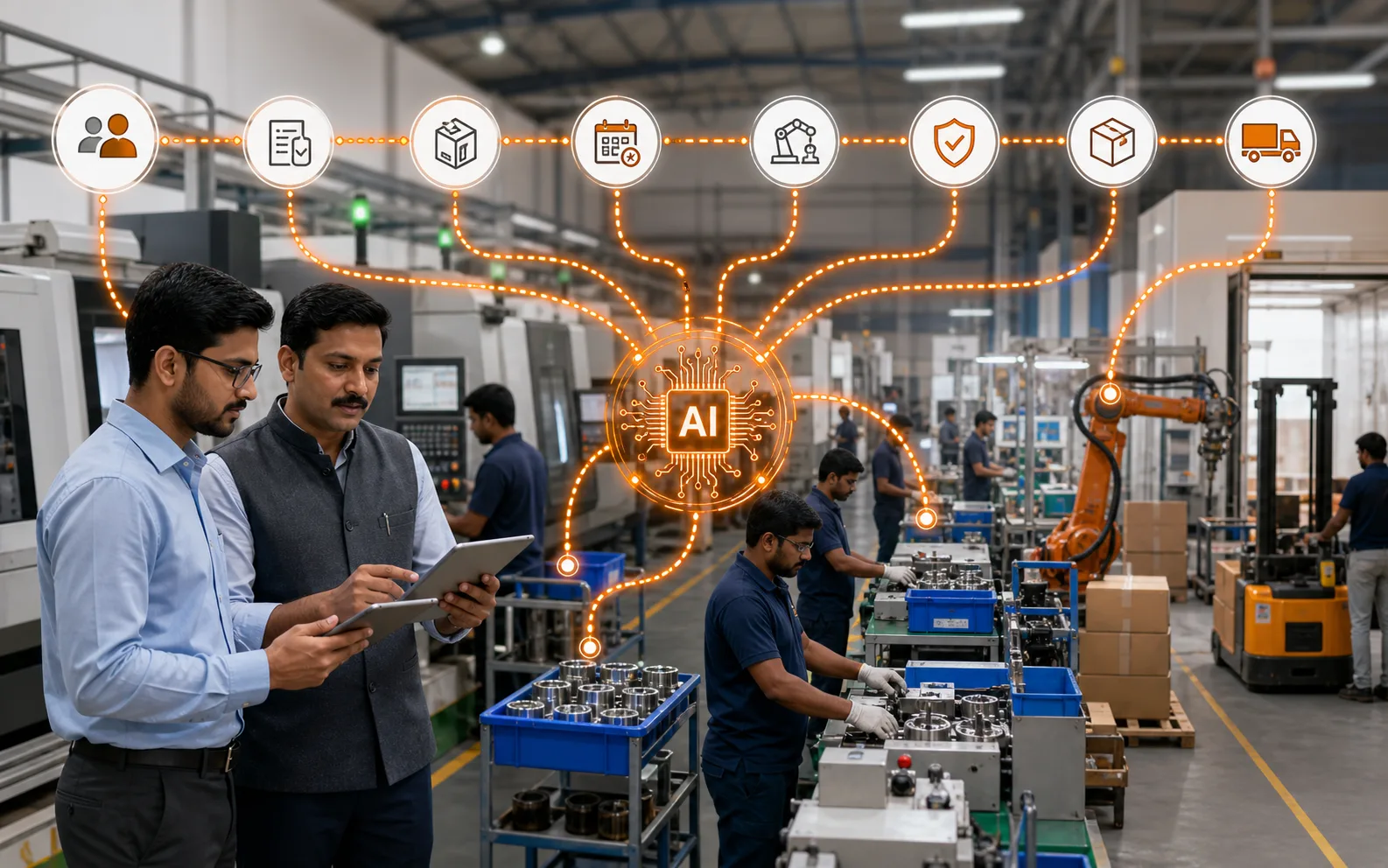
Learn how advanced planning and scheduling software improves production visibility, material planning, capacity use, delivery reliability, and manufacturing decision-making.
Run manufacturing cycle counts with freeze rules, blind counts, recount thresholds, movement reconciliation and approved posted differences.
Discover common inventory mistakes manufacturers make, from poor stock accuracy to dead stock and weak reorder planning, with practical fixes.
Learn how manufacturers can use demand forecasting to reduce stockouts, excess inventory, emergency purchases, and production delays.

Learn what reverse logistics means, how returns, repairs, replacements, recycling, and recovery work, and how manufacturers can manage reverse flows better with ERP.
Manufacturing ERP in Bangalore: Engineering Change Demo. Use a worked factory test, explicit inputs and exception checks before rollout.
A practical manufacturing guide that separates computer vision myths from reality, covering AI, accuracy, cost, operators, integration, maintenance, ROI, and factory adoption.
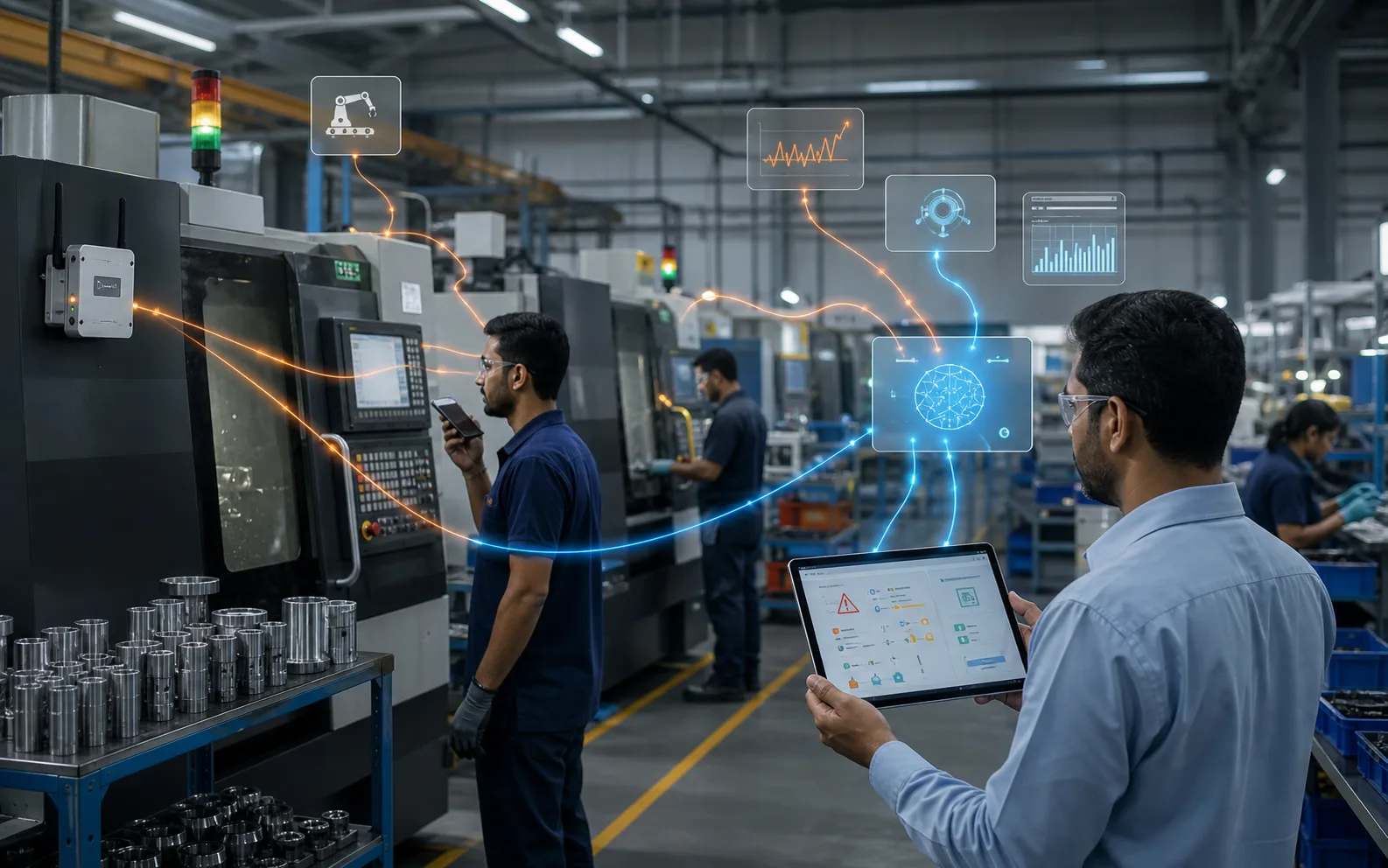
Use AI for manufacturing safety support through incident logs, SOP acknowledgments, maintenance signals and training reminders while avoiding surveillance and certification claims.
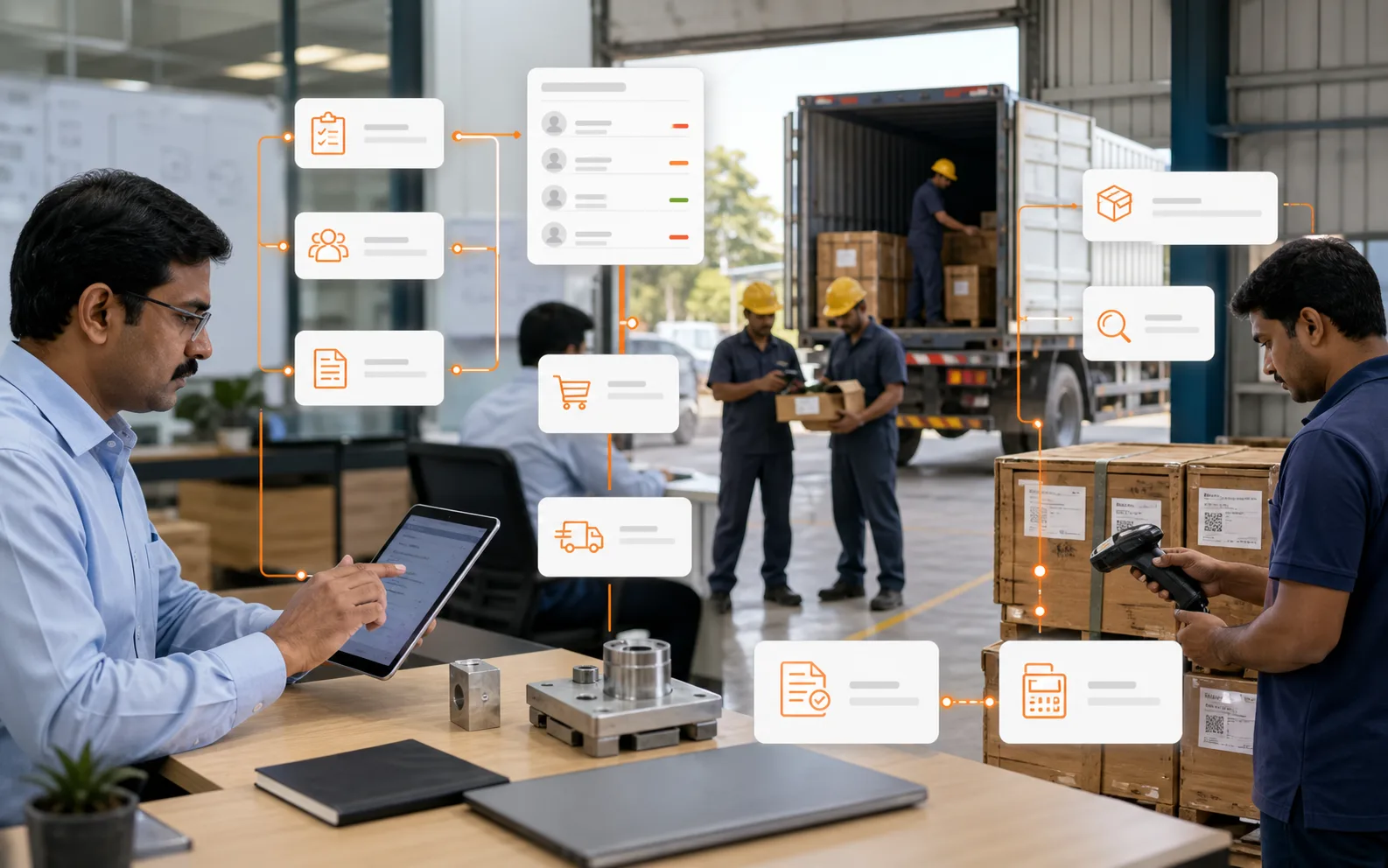
Learn how small manufacturers can protect ERP data through permissions, secure login, backups, audit trails, vendor checks, mobile controls, and employee discipline.
Learn what manufacturing ERP data should flow to finance, including purchase, GRN, stock valuation, production consumption, job costing, dispatch, invoicing, GST, and payables.
AI agents can be available 24/7 for defined tasks, but businesses still need monitoring, escalation rules, quality checks, and downtime planning.
AI procurement tools handle sensitive supplier, pricing, contract, and purchase data. Learn privacy risks and controls manufacturers should check.
Learn how manufacturers can evaluate industrial sensor suppliers by checking application support, reliability, documentation, service, integration fit, and long-term availability.
Learn how order processing management helps manufacturers control order flow, responsibilities, delays, approvals, production status, and dispatch performance.
Learn how Material Requirements Planning supports lean manufacturing by reducing shortages, excess stock, delays, and waste with Optiwise inventory and production visibility.
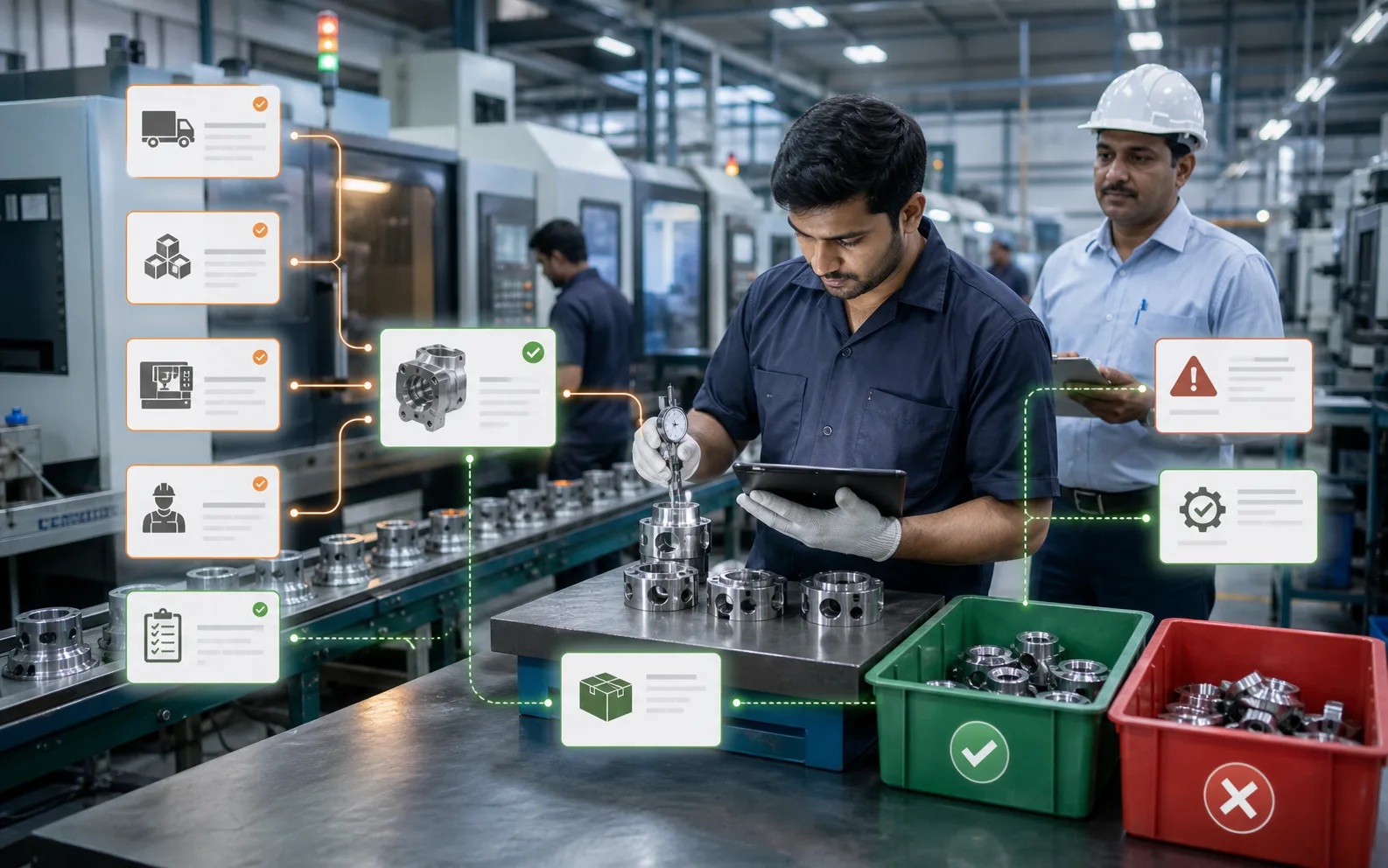
Manufacturing plants can survive without automation for a while, but competitiveness depends on productivity, quality, delivery, cost control, and data visibility.
Learn how to calculate machine efficiency using availability, performance, quality, utilization, cycle time, downtime, accepted output, and ERP-connected production data.
A practical guide for manufacturers on how IoT improves productivity through real-time visibility, downtime reduction, better planning, quality control, and energy discipline.
Learn how computer vision counts products on moving conveyors, what affects accuracy, and how manufacturers can use vision-based counting for production, packing, and dispatch control.
Learn when AI production planning is reliable, what affects planning accuracy, and how manufacturers can build trust with data, controls, and human review.
A step-by-step guide for MSME manufacturers moving from Excel, registers, WhatsApp, and manual records to ERP without losing customers, stock, orders, or financial data.
Learn how to monitor clean room equipment using ERP, IoT, maintenance records, calibration schedules, environmental monitoring, alerts, and quality review workflows.
Understand manufacturing AI data security, including access control, sensitive production data, vendor risk, audit trails, privacy, and safe implementation practices.