

How Do I Track CNC Machine Utilization?
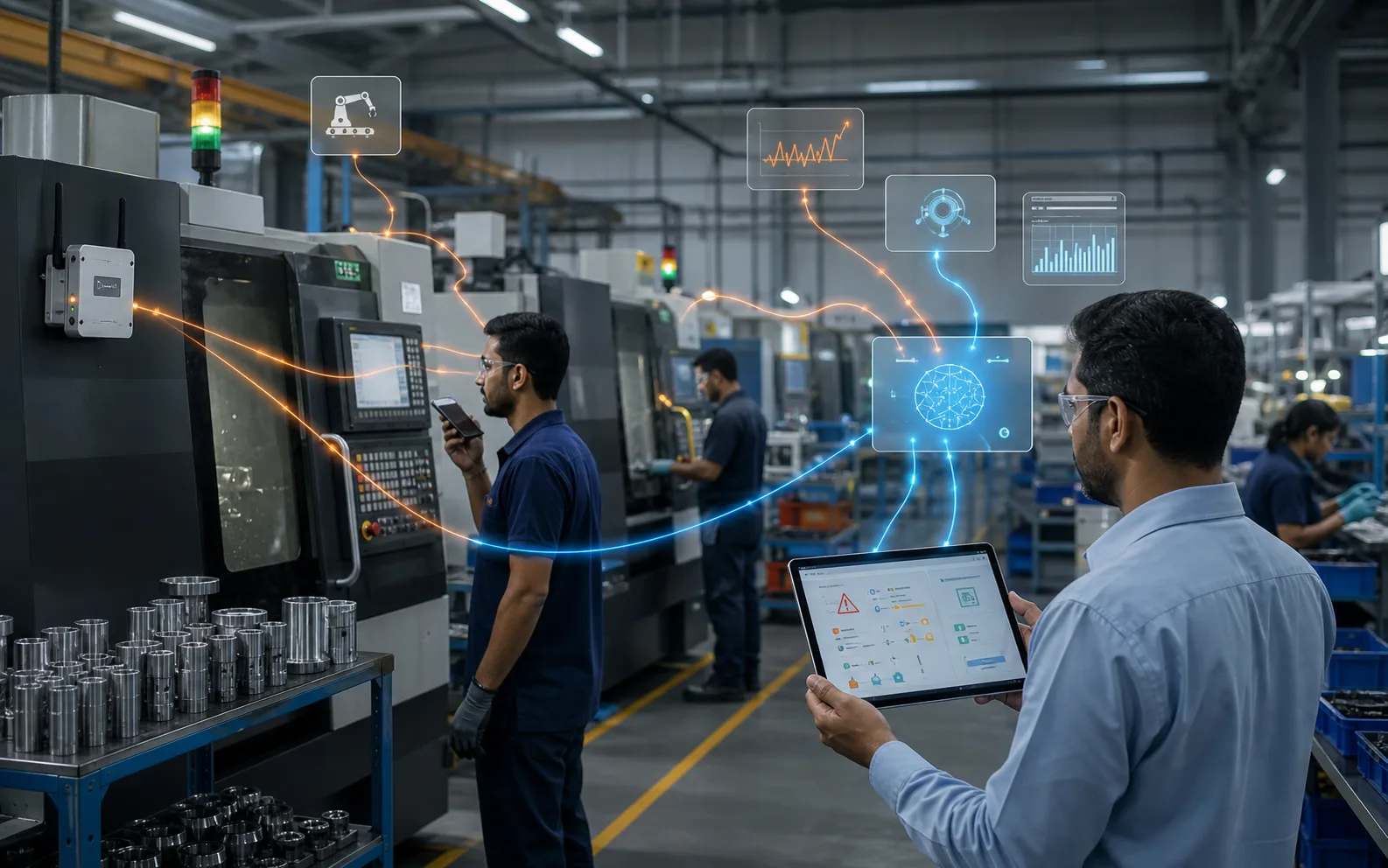
Learn how to track CNC machine utilization using planned time, running time, idle time, setup time, downtime reasons, production orders, operator updates, and ERP dashboards.
Loading Optiwise
A structured blog experience powered by the local AICAN CMS, with rich publishing, search visibility, and editorial control without WordPress.

Filter blog posts
1959 posts available, showing 1489-1512

Learn how to track CNC machine utilization using planned time, running time, idle time, setup time, downtime reasons, production orders, operator updates, and ERP dashboards.

Learn how IoT supports predictive maintenance by detecting early warning signs, reducing surprise downtime, and helping manufacturers plan maintenance better.

Learn how manufacturers can start using AI with limited factory data through focused use cases, data cleanup, SOPs, report summaries, and ERP foundations.

Learn how ERP can support FDA audit readiness through traceable records, batch history, audit trails, quality status, inventory control, and faster reporting.

Learn maximum stock level, formula, example, why it matters, common mistakes, and how Optiwise helps manufacturers avoid overstocking and cash blockage.

Learn how AI can help optimize production lines by identifying bottlenecks, reducing waste, improving schedules, analyzing quality, and supporting decisions.

Understand the difference between AI and traditional automation in manufacturing, including rule-based workflows, machine automation, prediction, and decision support.

AI agents can triage complaints, collect details, summarize history, suggest responses, and escalate sensitive cases to humans for resolution.

Learn what training employees need for sensor-based manufacturing systems, including operators, supervisors, maintenance, quality, and managers.

Before buying inventory software, ask these practical questions about manufacturing fit, data, integrations, reporting, AI, support, and long-term value.

Learn what lead time means in inventory management, how to calculate it, why it affects reorder levels, safety stock, production planning, and how Optiwise improves lead-time visibility.

AI ranks supplier offers by comparing price, lead time, terms, quality history, reliability, risk, and operational fit for procurement decisions.

Learn how to calculate ROI from manufacturing software through productivity gains, inventory control, quality improvement, cost savings, and faster decisions.

Learn how AI supports quality control in production planning by linking schedules, inspection status, defect trends, batch risk, and delivery commitments.

Learn how AI helps track production metrics automatically through ERP data, shopfloor entries, IoT signals, dashboards, summaries, and exception alerts.

Understand whether Tally is enough for a manufacturing SME, where accounting software helps, where ERP becomes necessary, and how Optiwise supports inventory, production, and AI workflows.

Understand cloud based ERP vs web based ERP, how they differ, what SMEs should evaluate, and how AICAN Optiwise supports connected manufacturing operations.

Learn whether AI can work with existing factory equipment, when sensors or IoT are needed, and how manufacturers can start with ERP, logs, and machine data.

Learn how cloud based MRP software helps manufacturers plan material requirements, avoid shortages, reduce excess stock, and improve production planning with AICAN Optiwise.

Avoid common ERP implementation mistakes for MSME manufacturers: unclear scope, messy data, weak training, excessive customization, poor leadership, and no adoption tracking.

A practical guide to implementing AI in real factory operations, from use-case selection and data setup to training, rollout, and measurement.

The easiest procurement processes to automate include quote comparison, PO drafting, supplier follow-ups, approval reminders, reorder alerts, and basic reports.

Learn how smaller manufacturers can afford IoT by starting with focused pilots, clear ROI, existing equipment, phased rollout, and practical manufacturing workflows.

Learn how industrial sensors support safety through presence detection, interlocks, monitoring, alerts, environmental sensing, and safer inspection routines.