

Inventory & Supply Chain
Can AI Handle Complex Supplier Negotiations?
Use AI for supplier negotiation preparation without giving away purchasing control. See limits, approvals, quote terms and Optiwise workflow.
13 May 20262 min read
Loading Optiwise
A structured blog experience powered by the local AICAN CMS, with rich publishing, search visibility, and editorial control without WordPress.

Filter blog posts
2013 posts available, showing 193-216
Use AI for supplier negotiation preparation without giving away purchasing control. See limits, approvals, quote terms and Optiwise workflow.

Learn the difference between debit note and credit note, when each is used under GST, and how manufacturers can manage corrections clearly in Optiwise.
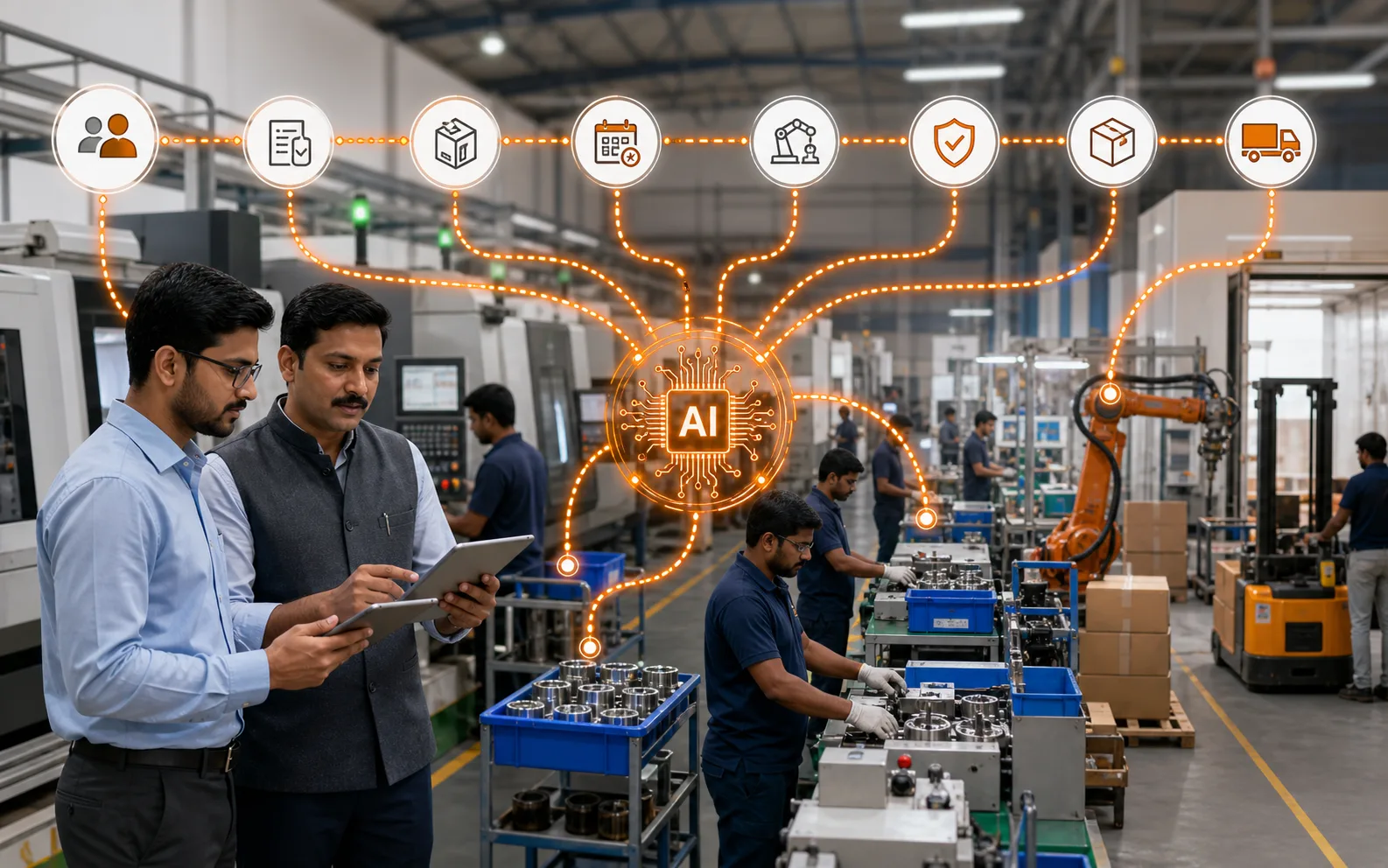
Define data ownership, field mappings, exchange methods, duplicate handling and reconciliation before connecting ERP to accounting or shop-floor tools.
Learn what an item master is, why it matters in manufacturing, key fields to maintain, common mistakes, and how Optiwise helps keep item data clean and usable.
Use a shortage response board to separate usable stock, demand, confirmed receipts, alternate sourcing, owner and the next decision time.
Learn how IoT improves quality control by connecting inspection data, batch traceability, machine conditions, process parameters, and corrective action.
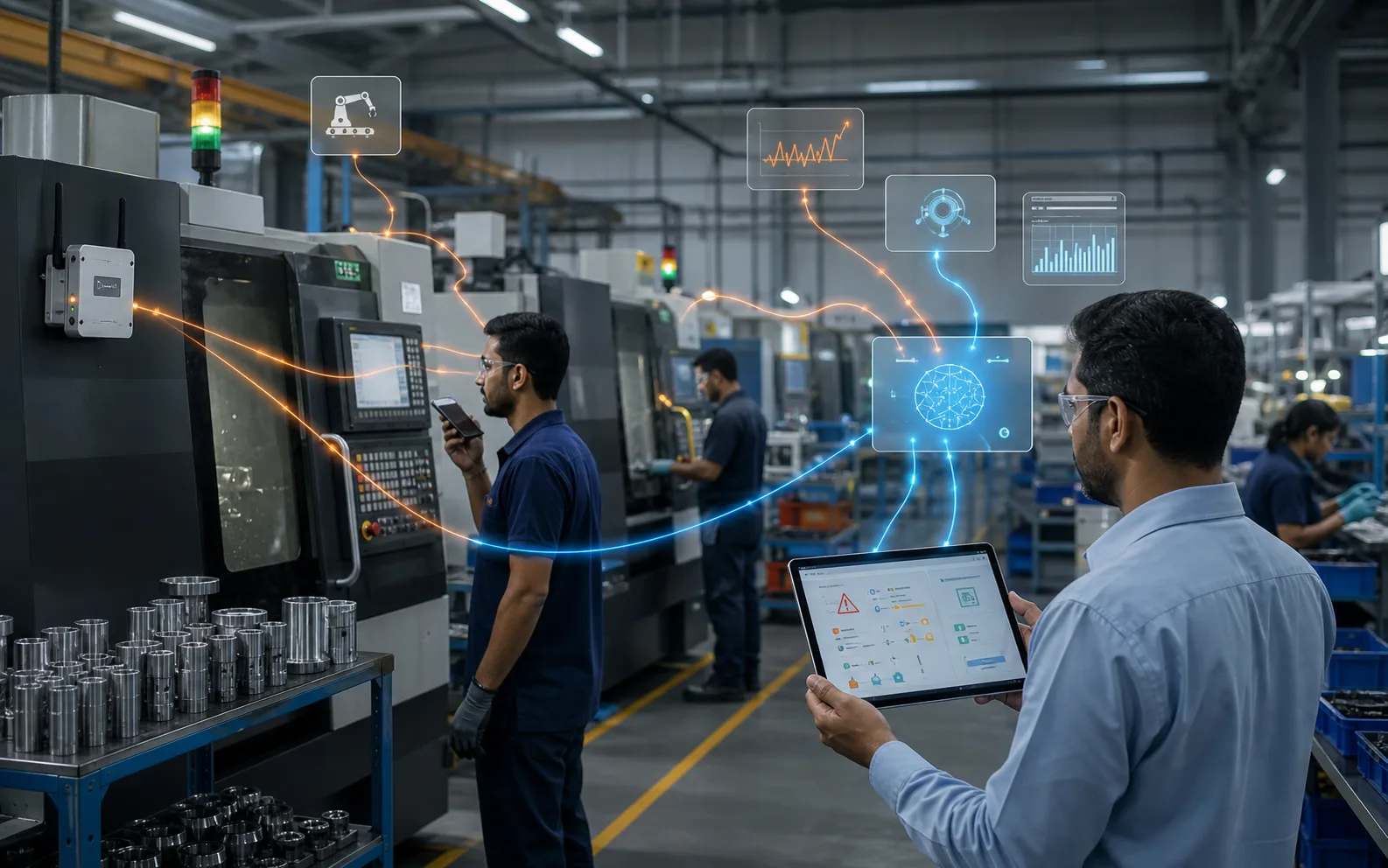
Learn what a manufacturing automation system is, where automation helps, common mistakes, ROI considerations, and how Optiwise connects automation with ERP, IoT, and AI workflows.
Learn why Indian manufacturing SMEs should go digital, how Digital India has changed business expectations, and how AICAN Optiwise supports factory digitisation.
Learn what ROI manufacturers can expect from AI through time savings, lower downtime, fewer defects, better inventory, faster planning, and improved visibility.

Explore realistic examples of how manufacturers use AI for production planning across material readiness, scheduling, forecasting, capacity, and dispatch risk.
Learn what manufacturers should look for in AI software, including ERP integration, data security, usability, workflow fit, explainability, ROI, and implementation support.
Compare IoT and traditional industrial monitoring for manufacturing, including data access, connectivity, dashboards, analytics, ERP integration, alerts, and scalability.
Test polymer ERP with resin grades, input lots, blend or BOM revisions, production batches, scrap, quality results and UOM reconciliation.
AI can support procurement, but strategic work like supplier relationships, ethical judgment, complex negotiation, and business trade-offs still needs humans.
AI can speed up supplier evaluation by comparing price, lead time, quality history, delivery reliability, risk, and past performance for manufacturers.
Follow resin lot, masterbatch, mould, machine, shift, output and quality disposition in one practical plastic production batch record.
Learn how small businesses should choose billing software, including GST-ready invoices, inventory linkage, sales orders, dispatch, payments, reports, and growth readiness.
Learn how manufacturers can compare shift performance fairly using production output, downtime, quality, manpower, WIP, planned vs actual targets, and connected factory dashboards.
Learn how textile and garment manufacturers can reduce production delays with ERP planning, material readiness, WIP tracking, job work control, quality visibility, and dashboards.
Build a production plan from demand, BOMs, usable materials and available capacity. Follow a worked 120-unit job and a practical shift-plan checklist.
Evaluate warehouse software with receiving, inspection holds, locations, barcode moves, production issues, counts and replenishment evidence.
See how planning and production control work together through a delayed-job timeline. Connect machine events, material readiness and revised commitments.
Track steel by grade, heat, measured weight, unit conversion, cut issue, reusable remnant, rejection and complete quantity reconciliation.
Manufacturing ERP in Surat: Order-to-Dispatch Factory Test. Use a worked factory test, explicit inputs and exception checks before rollout.