

Manufacturing
Takt Time Calculation: A Shift and Demand Worksheet
Calculate takt with matching shift and demand periods. Use a worked example to compare required pace, cycle time and changing product demand.
22 Sept 20264 min read
Loading Optiwise
A structured blog experience powered by the local AICAN CMS, with rich publishing, search visibility, and editorial control without WordPress.
Filter blog posts
2013 posts available, showing 49-72
Calculate takt with matching shift and demand periods. Use a worked example to compare required pace, cycle time and changing product demand.
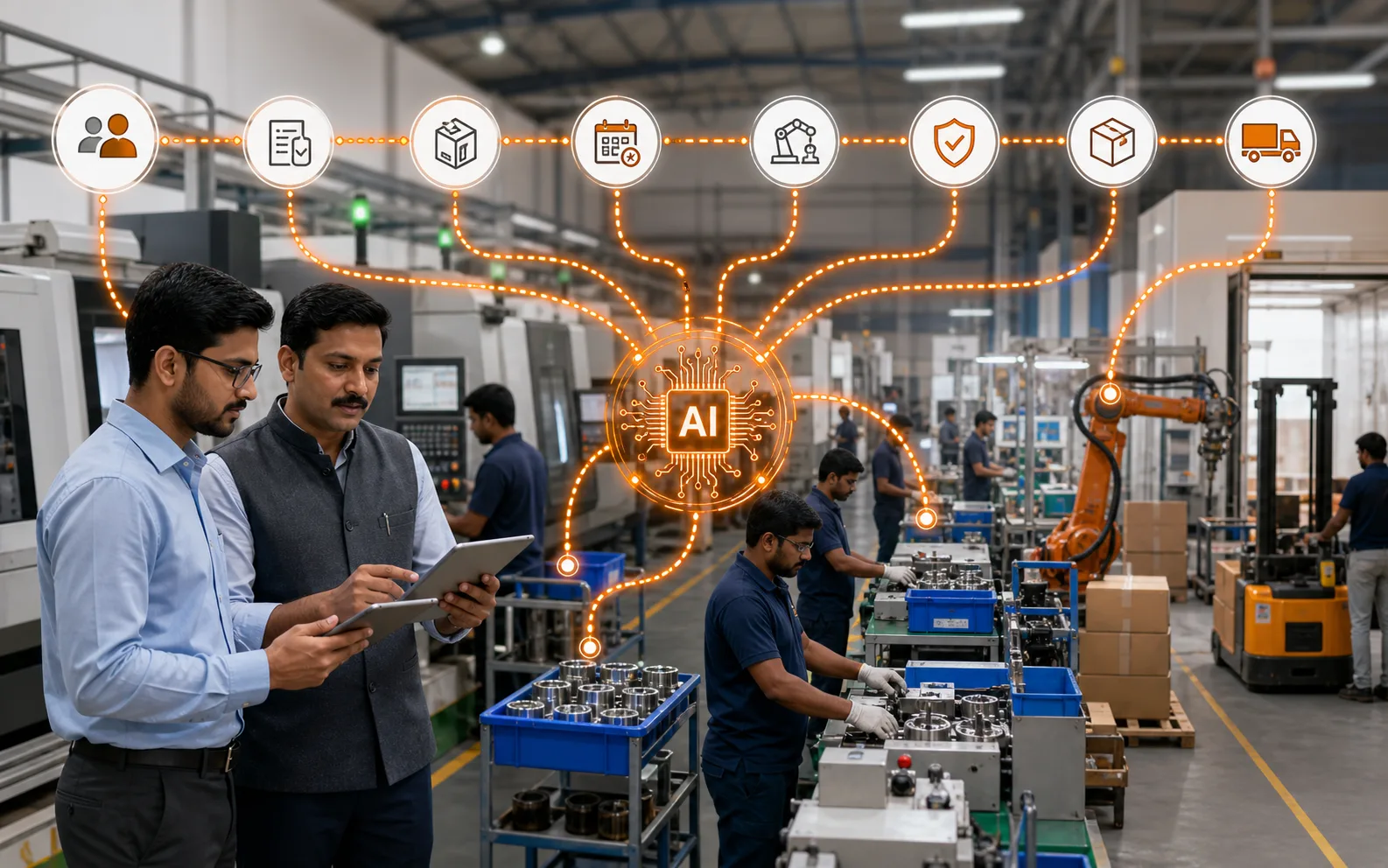
Separate stopped-machine work from preparation with a timed SMED worksheet, checked example, owners and safe changeover acceptance checks.
Compare Optiwise and ManufApp across AI, IoT, MES, planning, purchasing and quality. Run your factory with connected records and no-code workflows.
Compare Optiwise and ERPDrive for manufacturing. Explore AI agents, industrial IoT, Smart Suggest planning, vendor intelligence and no-code workflows.
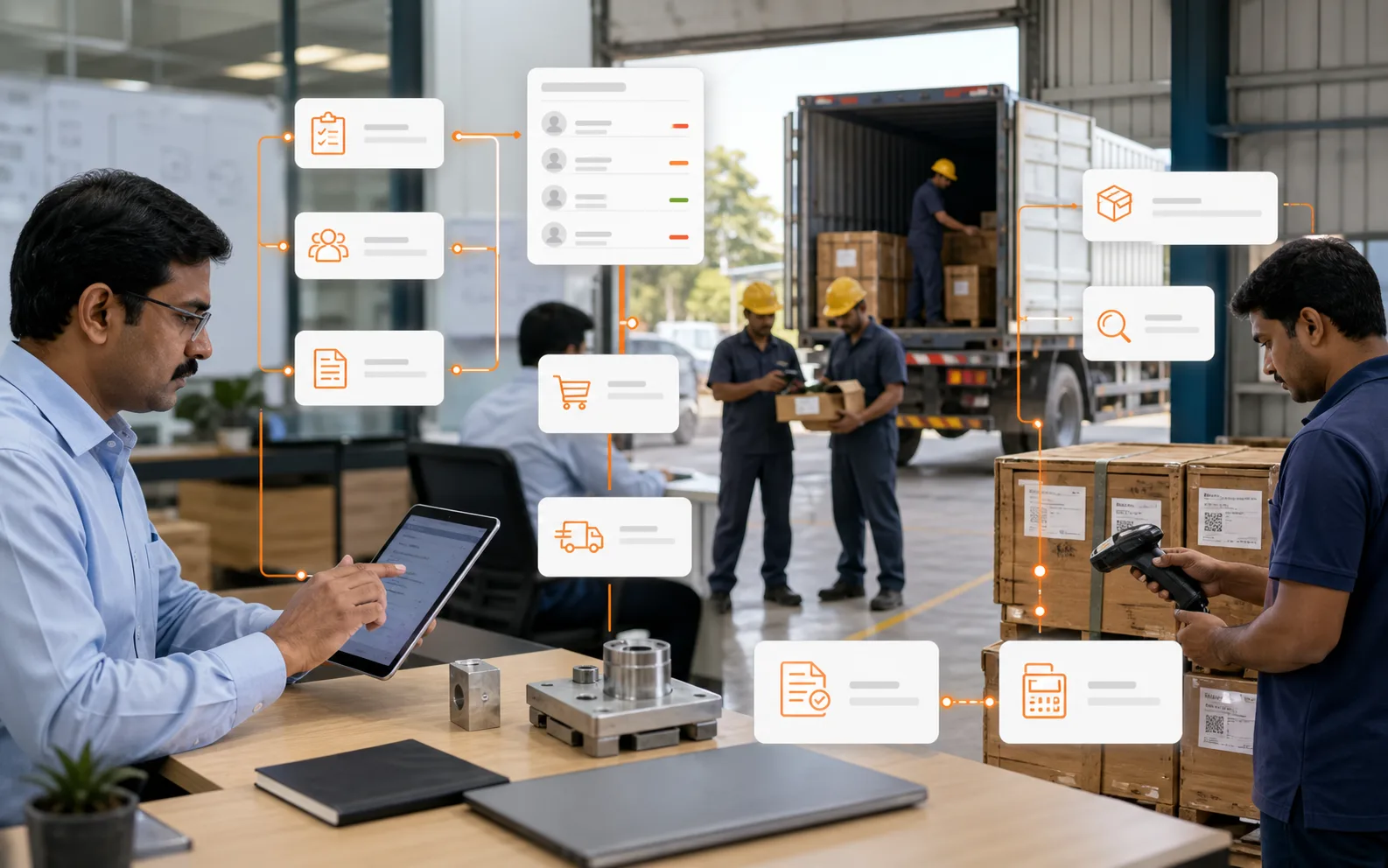
Compare Optiwise and OEMup for manufacturing ERP. See actionable AI, industrial IoT, vendor scoring, subcontracting and no-code customization.

Use a filled example and copyable worksheet to check required material, holds, other-job reservations, usable stock, shortages and the release decision.
Run your factory in Optiwise, a manufacturing alternative to SAP Business One with connected operations, AI agents and no-code workflows.
AI will change procurement work, but it is more likely to automate repetitive tasks than replace procurement professionals who build supplier judgment and strategy.
A practical guide for manufacturers to identify when spreadsheets, manual follow-ups, and disconnected systems are no longer enough — and when ERP becomes an operational necessity.
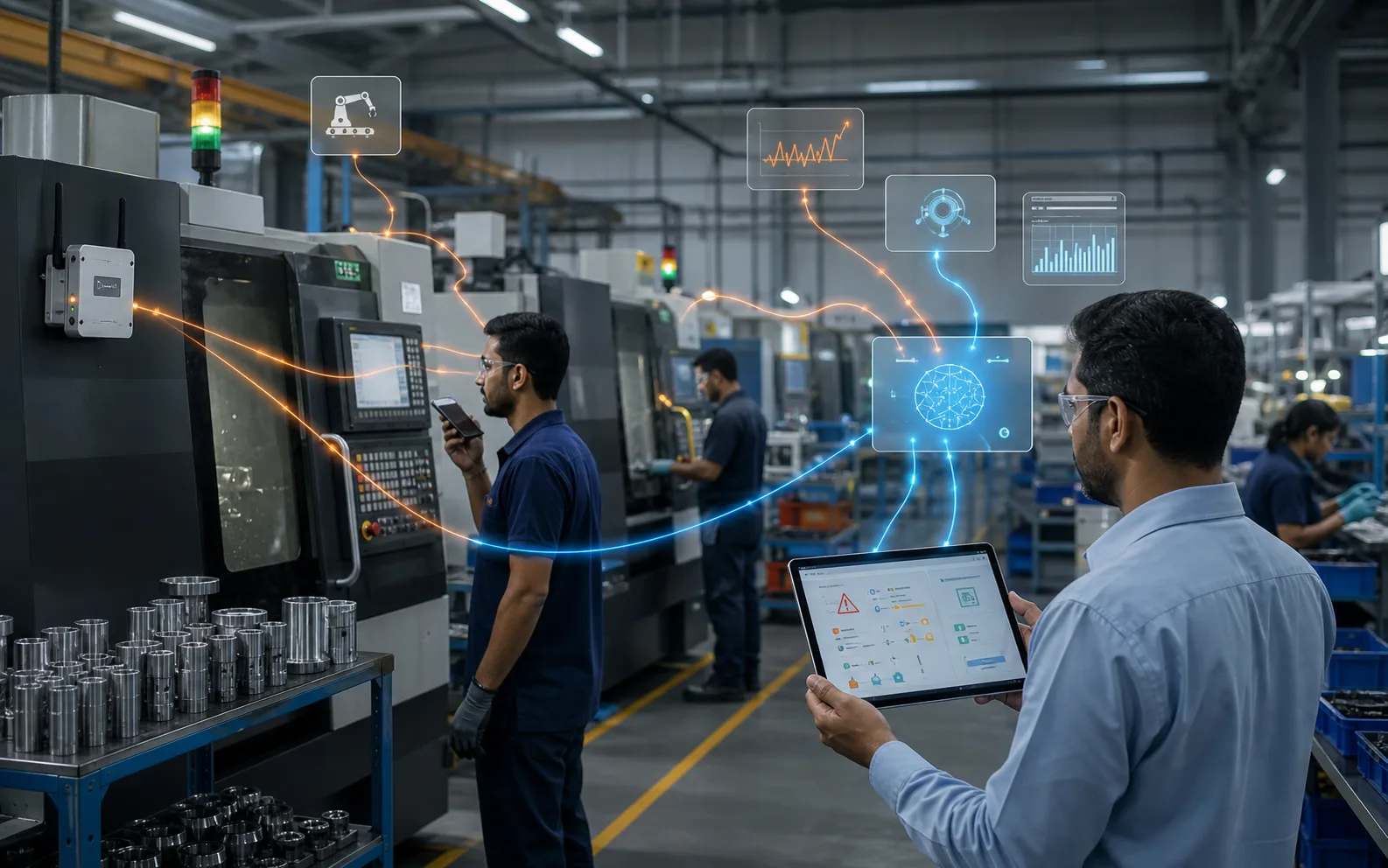
Learn how to decide if AI is worth the investment for your factory by evaluating use cases, data readiness, costs, risks, ROI, and operational impact.
Explore whether AI will create more jobs than it destroys, with a practical view of manufacturing, automation, new roles, reskilling, and business transformation.
List manufacturing AI mistakes and controls for unclear use case, messy data, unsafe automation, no owner, weak security and unreviewed recommendations.
Understand the difference between AI and regular automation in manufacturing, with practical examples for workflows, decisions, alerts, and predictive operations.
Understand the risks of AI in manufacturing, including bad data, wrong recommendations, safety issues, security, job fear, over-automation, and implementation failure.
Learn how IoT enables remote monitoring of manufacturing equipment through sensors, gateways, dashboards, alerts, maintenance visibility, and secure access.
Learn warehouse automation for manufacturing SMEs, including barcode scanning, inventory systems, receiving, putaway, picking, dispatch, and practical adoption steps.
AI agents reduce workload when applied to repetitive, structured tasks with clear rules, clean data, human oversight, and practical workflow integration.
Learn how a Kanban system works in manufacturing, where it helps, where it fails, and how Optiwise connects Kanban signals with inventory, purchase, and production planning.
Learn cloud procurement for SMEs and manufacturers, including purchase requests, approvals, supplier follow-up, inventory linkage, and how AICAN Optiwise improves control.
Learn best practices for optimizing a production management system across planning, scheduling, material readiness, quality, and reporting.
Learn how ERP improves operations management by connecting planning, inventory, purchase, production, quality, dispatch, finance, and reporting.
A practical guide to ERP for FMCG companies in India, covering distributor orders, batch tracking, expiry, inventory, production, schemes, costing, and reporting.
Compare manufacturing workflows in Optiwise, Odoo, Acumatica and Dynamics 365 Business Central. See what your factory can run in Optiwise.
Take manufacturing from BOM and stock records to connected planning, shop-floor execution, purchasing and AI with Optiwise.