
What Questions Should I Ask Before Buying ERP?
Use this practical ERP buying checklist before choosing software. Ask about workflows, modules, cost, implementation, data, customization, reports, support, and scalability.
Loading Optiwise
A structured blog experience powered by the local AICAN CMS, with rich publishing, search visibility, and editorial control without WordPress.

Filter blog posts
2013 posts available, showing 1009-1032

Use this practical ERP buying checklist before choosing software. Ask about workflows, modules, cost, implementation, data, customization, reports, support, and scalability.

AI agents can handle follow-up communications for leads, customers, suppliers, and internal tasks when rules, tone, timing, and escalation are clear.

Learn what factories in Delhi should expect from ERP, including production planning, inventory, purchase, dispatch, finance, compliance, reporting, and AI readiness.

Learn how AI predicts machine failures, what data is needed, what limits exist, and how factories can use predictive maintenance responsibly.

Learn the difference between aggregate planning and master production schedule, how both support manufacturing planning, and how ERP connects demand, capacity, and production.

AI can automate a meaningful percentage of repetitive business tasks, but the exact number depends on workflow clarity, data quality, risk, and human judgment needs.

Learn how to implement a barcode inventory system with item master cleanup, labels, scanning workflows, receiving, issue, stock counts, and ERP integration.

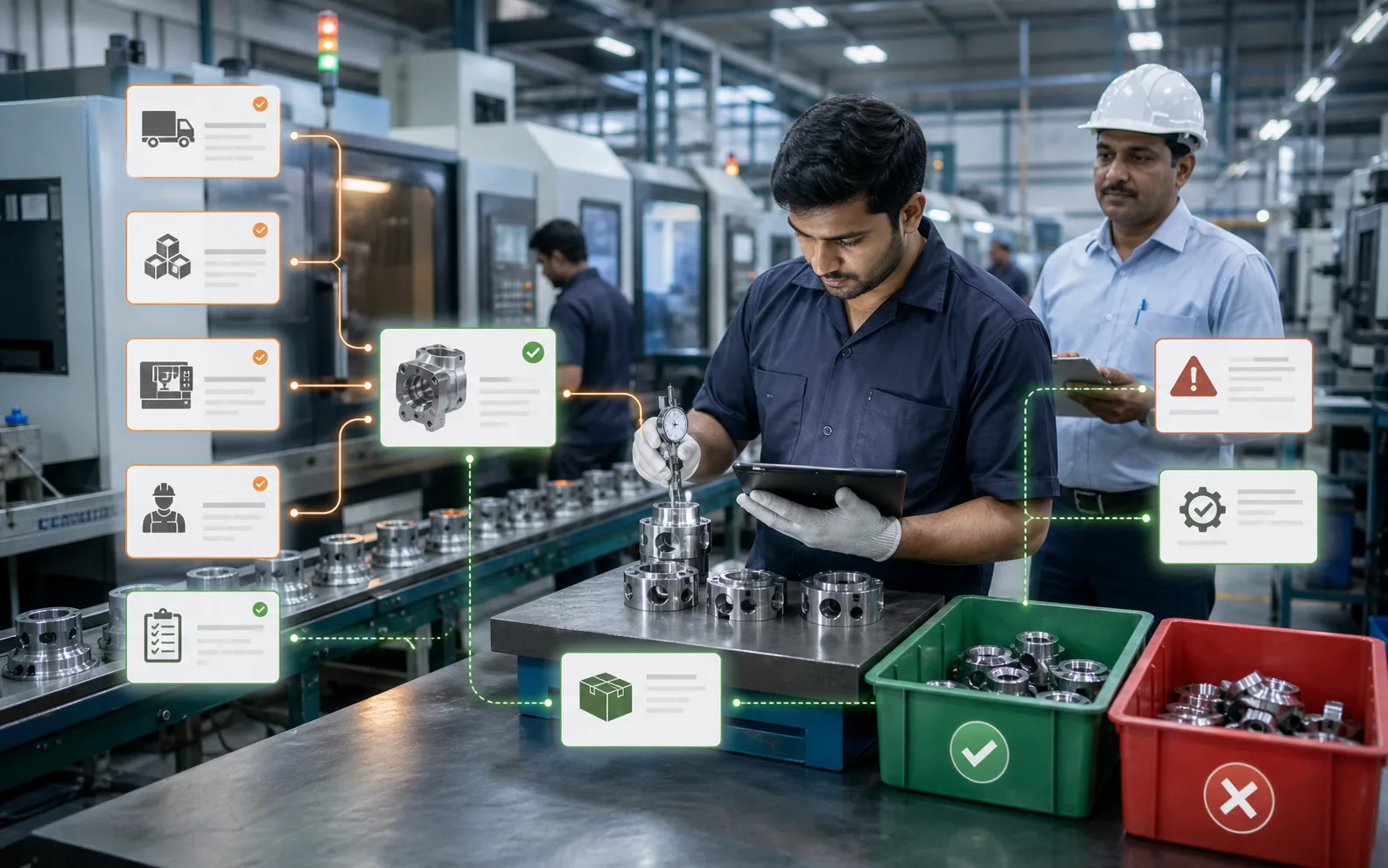
Evaluate CNC job-work ERP using a drawing-to-dispatch test covering customer material, routing, setup, inspection, outside processing and job costs.

See late orders, shortages, quality holds, job progress, dispatch risk and the next action in one connected Optiwise factory dashboard.

Learn how PCB manufacturers can track production from customer order, BOM, material lots, panel preparation, drilling, plating, etching, solder mask, testing, rework, quality, and dispatch.

Learn why traditional ERP often fails in manufacturing when it lacks shopfloor fit, real-time visibility, user adoption, flexibility, reporting, and AI-ready workflows.

Compare production planning in Optiwise and ERPNext. Use Smart Suggest, work orders, machine allocation and connected quality workflows.

Learn how ERP simplifies GST compliance by improving invoice accuracy, purchase records, ITC reconciliation, e-way bill readiness, e-invoice data, and reports.

Understand how AI affects manufacturing jobs, which skills will matter, and why human judgment, domain knowledge, and AI literacy remain valuable.

Manage manufacturing enquiries, quotation versions, approvals, follow-ups and sales-order conversion in Optiwise, connected to purchasing and production.

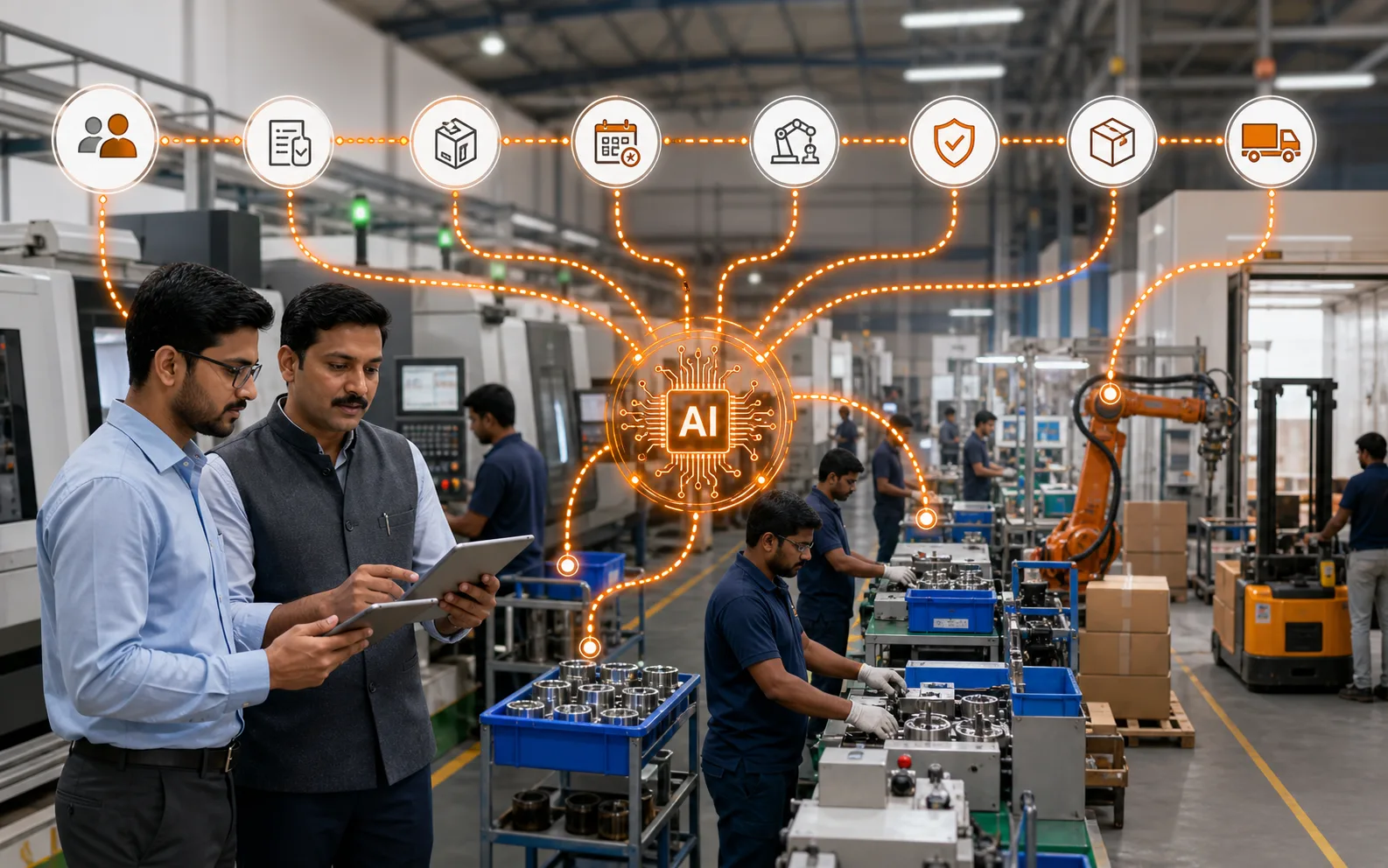
A step-by-step guide for manufacturers who want to start using AI without disrupting operations, overspending, or overwhelming teams.

Learn how manufacturers can start AI even with messy data by prioritizing use cases, cleaning critical records, standardizing inputs, and improving over time.

Learn how warehouses use inventory software to cut waste through stock accuracy, FIFO control, slow-moving reports, better picking, and reduced overstock.

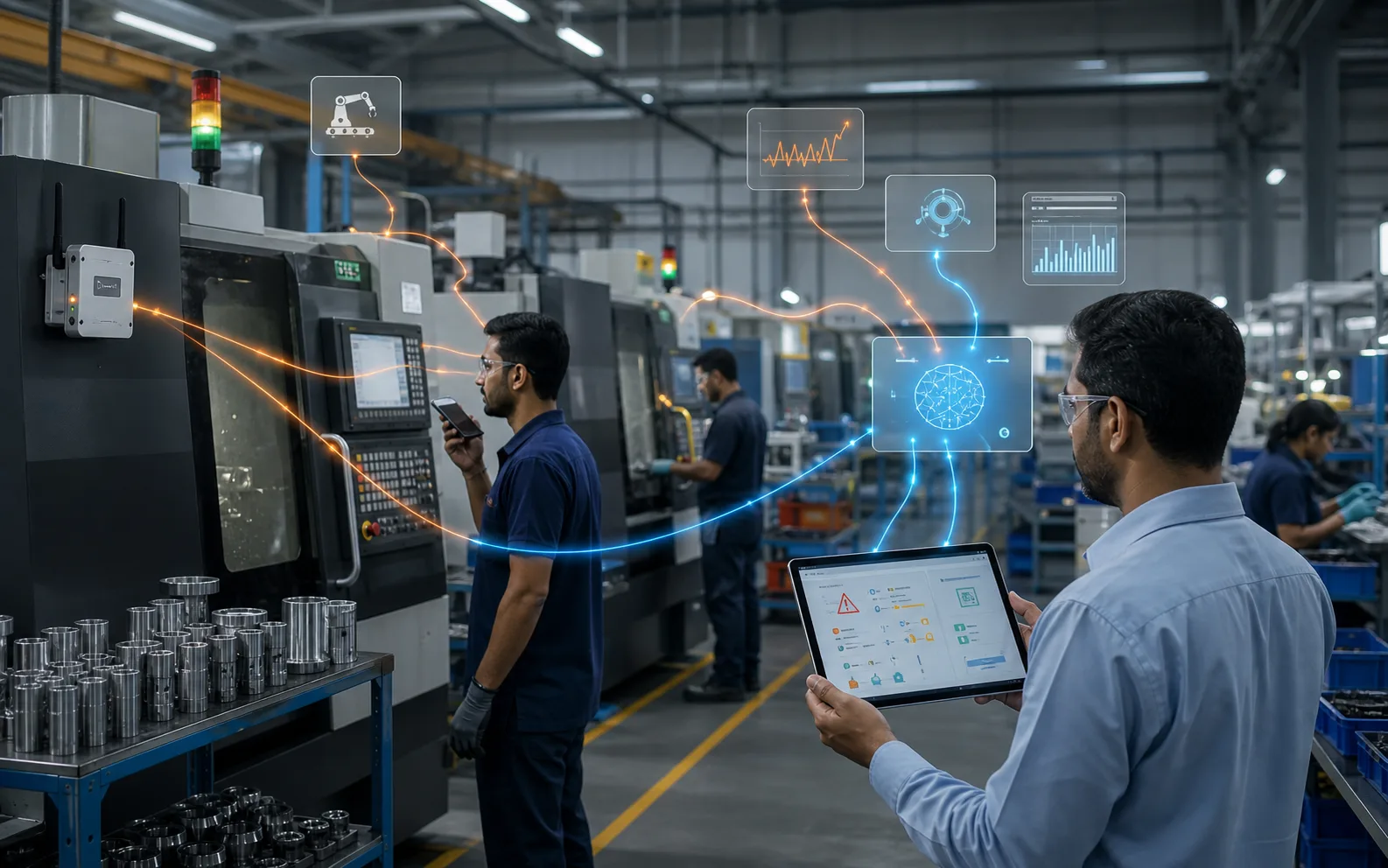
Check factory IoT readiness through machine signals, access, power, network, asset naming, owner and business question.

Learn how to optimize warehouse stock with accurate records, storage discipline, stock classification, reorder planning, FIFO, slow-moving analysis, and ERP visibility.

Understand whether AI reduces factory headcount, how roles change, and how manufacturers can use AI to improve productivity without damaging team trust.

Learn what ERP success looks like for small manufacturers through realistic operating patterns: better inventory, fewer delays, faster reports, clearer production, and stronger adoption.

Learn how manufacturers can monitor machine utilization using running time, idle time, downtime, output, planned capacity, maintenance, quality, and ERP or IoT dashboards.

Automation cannot replace manufacturing skills like judgment, machine intuition, quality thinking, safety awareness, problem-solving, and team coordination.