
Can IoT Help Predict Machine Failures?
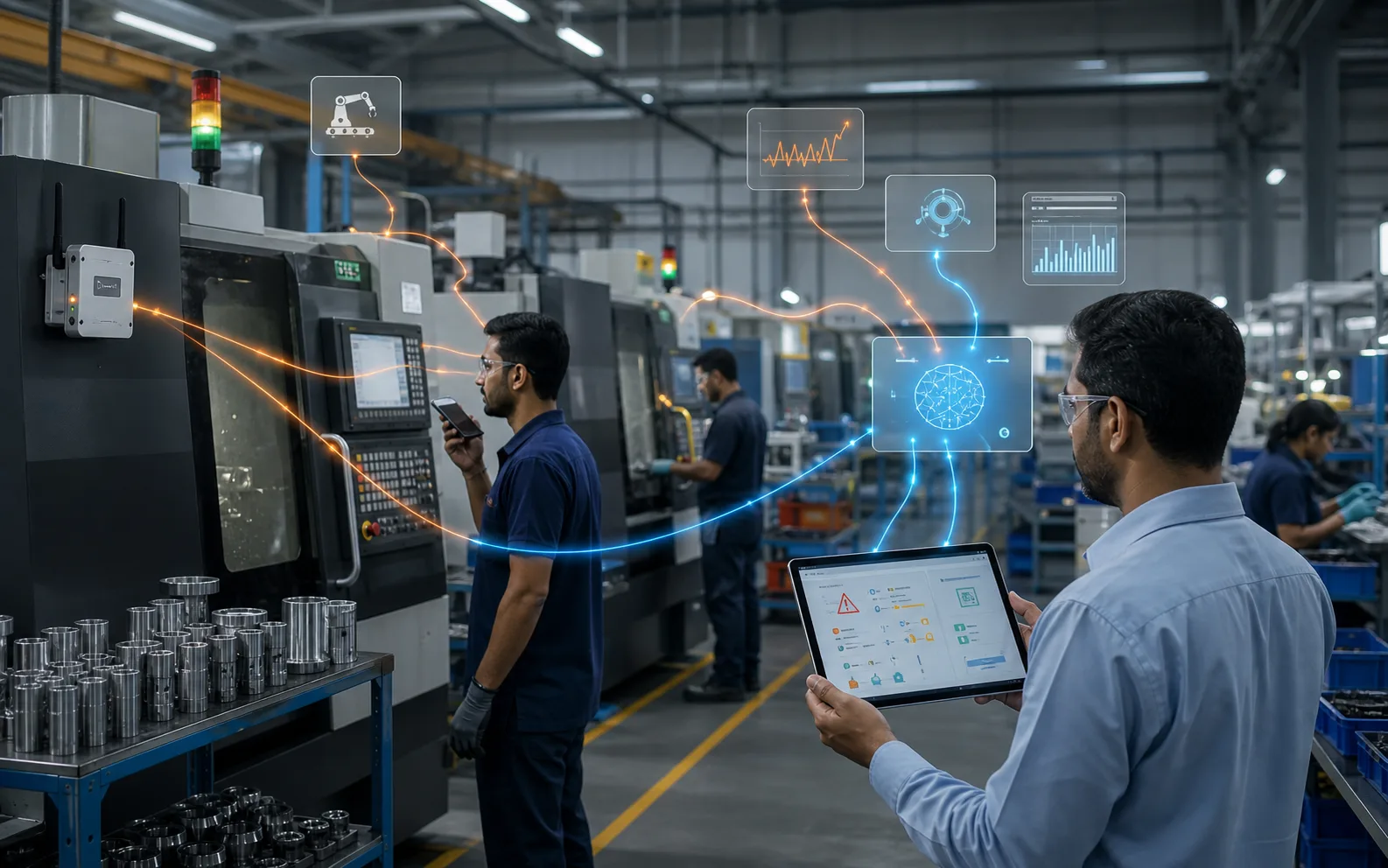
Learn how IoT can support machine failure prediction through condition monitoring, vibration, temperature, current, alerts, maintenance history, and practical preventive action.
Loading Optiwise
A structured blog experience powered by the local AICAN CMS, with rich publishing, search visibility, and editorial control without WordPress.

Filter blog posts
2013 posts available, showing 1297-1320

Learn how IoT can support machine failure prediction through condition monitoring, vibration, temperature, current, alerts, maintenance history, and practical preventive action.

Learn how manufacturers can scale IoT from a few machines to lines, departments, plants, and business systems without creating complexity or losing data quality.

Learn what order management means, how it works in manufacturing, common challenges, and best practices to improve delivery reliability.

10 Manufacturing ERP Capabilities to Test in One Order. Use a worked factory scenario, explicit inputs and exception checks before rollout.

Learn how manufacturers can detect machine breakdowns quickly using downtime alerts, escalation workflows, maintenance logs, ERP dashboards, and factory floor visibility.

Learn how to choose the best ERP for food manufacturing, with guidance on batch tracking, expiry management, recipes, production planning, quality, and distribution.

Understand how manufacturing IoT data is collected, transmitted, stored, processed, accessed, integrated, secured, and used for factory decisions.

Learn how heat, dust, vibration, moisture, oil, electrical noise, lighting, mounting, and cleaning routines affect industrial sensor performance.

Learn how manufacturers can train workers on new factory software faster using role-based workflows, simple screens, hands-on practice, champions, and phased adoption.

Learn how manufacturers can reduce equipment downtime with preventive maintenance, downtime reason tracking, alerts, spare planning, and real-time factory visibility.

Learn how food manufacturers can reduce wastage using ERP visibility across yield, expiry, recipes, production planning, quality, packaging, inventory, and costing.

A practical explanation of how AI-driven factory management affects jobs, which skills matter, and how workers can prepare without fear.

Explore the benefits of cloud ERP for SME manufacturers, including remote access, faster rollout, lower infrastructure burden, connected workflows, scalability, and better visibility.

Learn how B2B and B2C warehousing differ in order size, picking, packing, inventory, dispatch, returns, and how Optiwise helps manufacturers manage warehouse workflows.

See job progress, material holds and rework in Optiwise. Follow one order from process entries to quality release and the next production decision.

Learn how ERP can integrate with CNC and VMC machines, what data can be captured, what factories should prepare, and how machine connectivity improves production visibility.

Compare practical ERP implementation strategies including phased rollout, big bang, pilot rollout, module-wise rollout, and process-first implementation.

Manufacturing ERP Interface. Use a worked manufacturing test, explicit inputs and exception checks before rollout.

Give factories a decision tree for ERP-only AI, manual entry, IoT edge devices, sensors and machine-controller options with OptiEdge boundaries.

Learn the practical skills manufacturing teams need to use AI at work, including process knowledge, data discipline, prompting, review, and decision-making.

Understand what digital job travelers do, why manufacturers use them, and how ERP-connected job travelers improve shop floor tracking, quality, costing, and delivery visibility.

Understand the difference between manufacturing and production, how each term applies in factories, and how Optiwise helps manage end-to-end manufacturing operations.

Map AI inventory actions for low stock, abnormal consumption, ageing, reservations, open POs and approval-controlled purchase indents.

Learn the hidden costs of ERP implementation for manufacturers, including data cleanup, training, customization, integrations, downtime, support, internal effort, and change management.